Humans inhabited the coastal area of Tianjin in as early as the Neolithic Age, and since civilization emerged later, the region has been a key administrative unit of China. Following the opening of the Grand Canal, Tianjin has played an even more important role. By the mid-Tang Dynasty (618-907), it had become a vital hub for transporting grain and silk by land and water. Situated near Beijing, it has long been recognized for its strategic significance.
Tianjin Museum, originally built in 1918, is among the oldest museums in China. Its most treasured items include Western Zhou Dynasty Taibao Ding, Sui Dynasty White Porcelain Conjoined Vase with Dragon-Shaped Handles, Northern Song Dynasty Snowy Scene of Wintry Trees, and Qing Dynasty Qianlong-Marked Enamel Vase with Pheasants and Peonies.
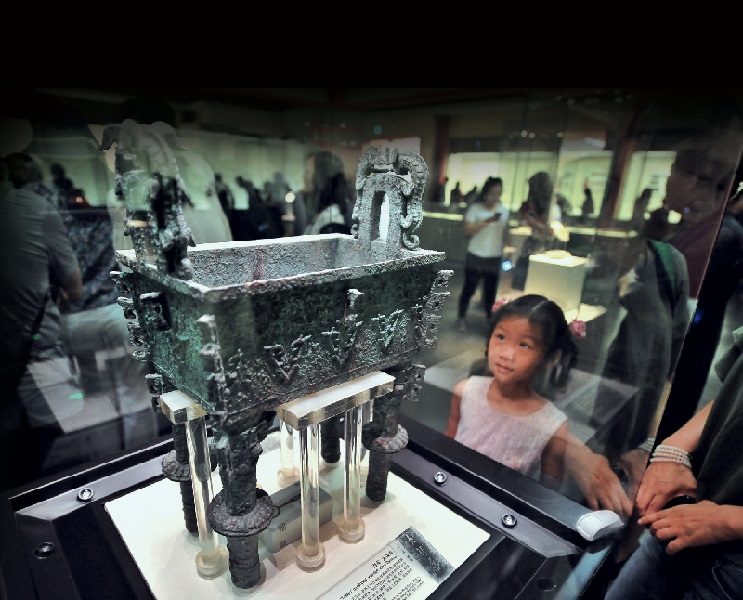
Taibao Ding
Western Zhou Dynasty (1046-771 B.C.) Taibao Ding is listed as a national treasure prohibited from being exhibited outside of China, among 194 other rare items. Ding was originally a kind of cookware but later recognized as a status symbol and ritual bronzeware in the Shang and Zhou dynasties over 2,000 years ago.
This majestic ding weighs 26 kilograms and stands 50.7 centimeters tall, decorated with intricate patterns. The highlight of Taibao Ding is the inscription of its name, literally meaning a Taibao casted it. Taibao was a premier official title of the Zhou Dynasty (1046-256 B.C.). Experts conclude that, based on historical texts, this particular Taibao refers to a man called Zhao Gong who was admired by many for his advocacy of frugality.
The three characters carved on the inner chamber testify the fact that Zhao held one of the highest executive positions during the reign of Zhou King Cheng. To award this admirable figure, he was allowed to build ding to demonstrate his prominent status.
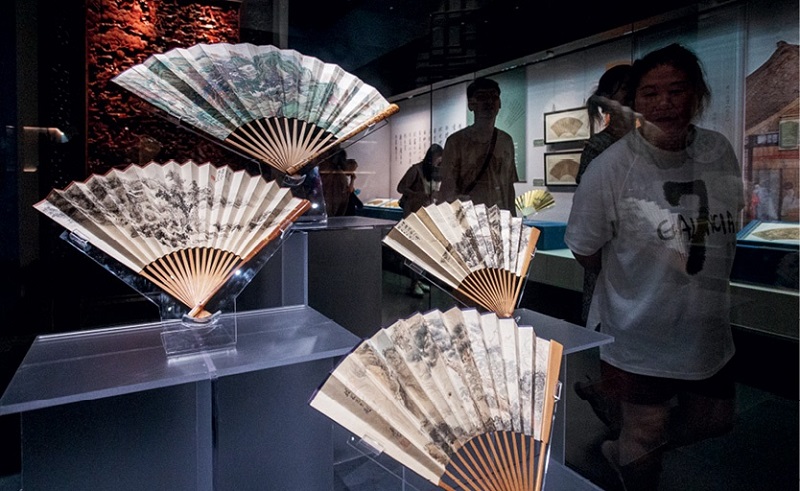
A handheld-fan-themed exhibition is held at the Tianjin Museum in 2025.
Rare White Porcelain
Sui Dynasty (581-618) White Porcelain Conjoined Vase with Dragon-Shaped Handles is another item among the carefully protected 195 treasures. It is recognized as the earliest fine work of white porcelain, and represents the best white porcelain making techniques at the time.
This relic has two striking features: the body consists of two bottles joined together; its handles are carved into the shape of a dragon. Two dragons rise from the round body of the 18.5-centimeter-tall vase and thrust their heads toward the opening as if gulping down the delicious drink in the vessel.
This design, an innovation in the Sui Dynasty, mixed the bottle styles of local and Western Regions. Only three bottles of this design exist today, and the piece in the Tianjin Museum is the only one inscribed with words, stating “this vase is conjoined together.”
This vase was unearthed from Li Jingxun’s tomb in Xi’an City of northwest China’s Shannxi Province. Li was the granddaughter of Yang Lihua – an empress of Northern Zhou Dynasty (557-581) and the eldest daughter of Sui Dynasty’s founding Emperor. Yang adored this granddaughter by lovingly caring for her as – described by a Chinese expression – one holds a precious pearl. Tragically however, despite the best care she could get, Li died at the age of nine, which broke Yang’s heart. Yang buried her with numerous precious funerary goods.
A Priceless Painting
Snowy Scene of Wintry Trees is one of the few authentic paintings of the Northern Song Dynasty (557-581) master Fan Kuan that survive today, making it the crown jewel of Tianjin Museum. To protect the fragile relic, the museum displays it to the public only once every five years. Its last public exhibition in 2023 drew throngs of visitors.
This 2-meter-wide and 1.6-meter-long landscape painting portrays a serene hilly scenery in north China after snowfall. At a hillside dwelling, a man sticks his head out from behind the door and takes in the wintery scenery. Patches of fog shroud the ground and streams, and gently drift along.
Despite the frigid weather, the mountains in the painting are dotted with greenery – the vibrance of life is abundant as a symbol of hope even in harsh conditions, a message that Fan might have wanted to convey.
It is widely recognized that Fan’s work represents the best of Northern Song landscape painting. The work features all his iconic techniques and styles, especially the unique use of brush strokes to present the texture of hills, trees, and rocks. He usually used hard lines like iron wires to depict houses which thus have been humorously called “iron houses.”
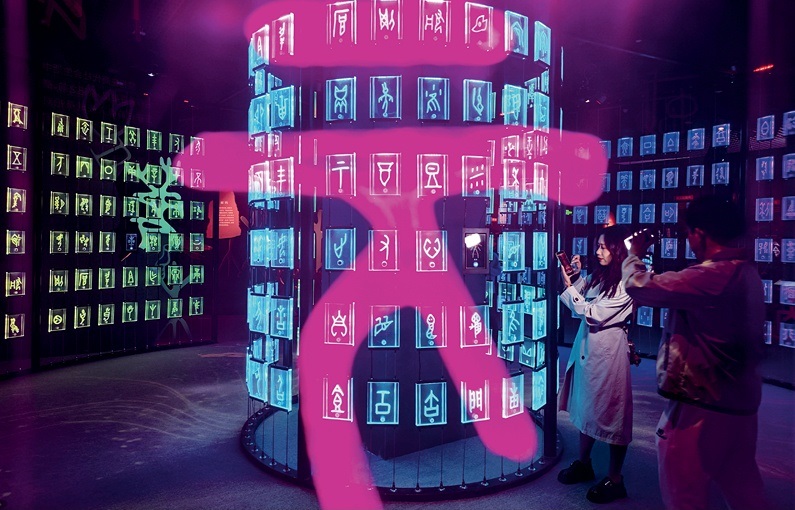
Visitors photograph an interactive facility at an oracle-themed digital exhibition at the Tianjin Museum, on April 21, 2026.
An Enamel Masterpiece
Among the museum’s most prized Qing Dynasty (1616-1911) treasures is the Qianlong-Marked Enamel Vase with Pheasants and Peonies. This artifact integrates poetry, calligraphy, painting, and seals into a single work of art.
Enamel, or falangcai, overglazing technique was used on porcelain in China, dating back to the Ming Dynasty, and enamel works refer to those produced at Qing imperial workshops. Surviving examples are exceptionally rare.
The vase is small and elegant, standing 16.3 centimeters high with a 5-centimeter diameter base. The vessel exhibits poetry, calligraphy, painting, and seal marks, it can be viewed as a complete traditional Chinese painting in the form of porcelain. The original designs for such works were often created by distinguished court painters.
Another reason for the rarity of enamel porcelain is its extraordinarily complex production process. Plain porcelain was fired at kilns in Jingdezhen, Jiangxi Province and then sent all the way north to Beijing, where artisans painted the bodies with enamel pigments. Painting on porcelain is challenging because of its smooth surface – much like painting on glass.
After painting, they were fired again in the imperial kilns in Beijing. As the porcelain bodies used for enamel are much thinner than ordinary porcelain, they are highly susceptible to cracking during the second firing. The technical demands for precision were therefore exceptionally high.
Public Education
Tianjin Museum continues to strengthen its role in public education by drawing upon its rich collections to create engaging cultural programs that bring history to life.
During this Spring Festival, the museum launched a series of activities including a New Year-themed exhibition, intangible cultural heritage handicraft workshops, and a New Year fair. To mark this year’s Dragon Boat Festival, the museum also organized an event to recreate the traditional art of flower arrangement inspired by the painting, Dragon Boat Festival, an item in the museum collection.
“Young Docent” summer and winter camps are organized each year to cultivate interest in Chinese culture among teenagers. Free cultural lectures are also held regularly, giving the public an opportunity to experience the enduring charm of traditional Chinese culture.
Meanwhile, through livestreamed programs and digital exhibitions available on its website, the museum also continues to expand the reach of its educational initiatives, ensuring that high-quality cultural resources are accessible to an even wider audience.