The megacity of Shanghai has always been a byword for “modern” and “style” to many Chinese including me. Today, faced with high density, an aging population and a profound history, it once again impresses me with how it balances heritage preservation and modern lifestyles during self-regeneration.
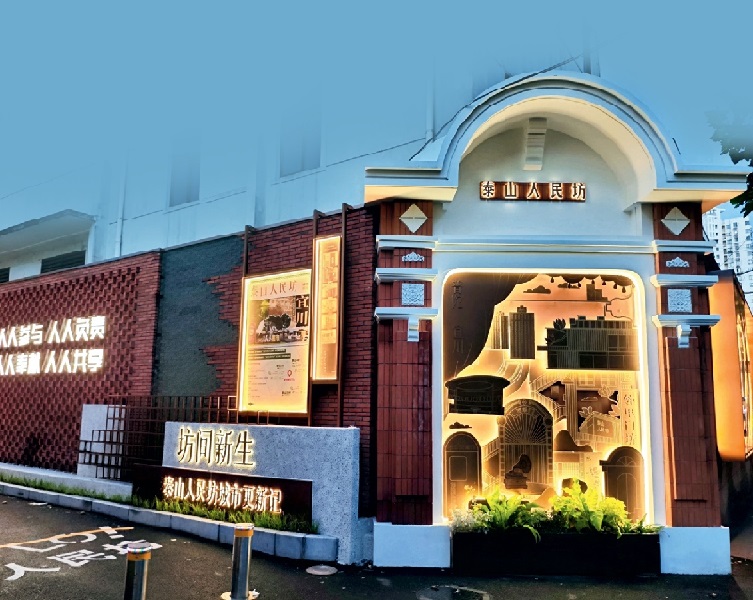
Take the Taishan People’s Neighborhood as an example. Situated in Yichuan Subdistrict of Putuo District, it comprises three residential compounds built in the 1970s. The complex embodies the living memories of an entire generation, yet decades of neglect have left chronic problems: compound walls cut the neighborhood apart, aging residential facilities, a severe shortage of public space, and lack of green spaces. Such conditions, however, are a common predicament facing old urban neighborhoods across the globe.
Today, everything has changed after the city promoted minor renovations, incremental upgrades and refined community governance. This approach remains true to the people-centered philosophy that recognizes the value of old neighborhoods, and moves away from the previous forceful model of large-scale demolition and reconstruction.
Turning Waste Space into Treasure
In the past, the neighborhood was split apart by walls. The partitions not only fragmented the land, but also cut off interactions between neighbors, leaving disjointed, scattered courtyards and a physical and social breakdown of shared urban spaces.
General global urban regeneration practices include removing compound boundary walls, opening up residential blocks, and weaving integrated non-motorized networks.
The neighborhood’s renovation was delivered following this philosophy. The project demolished three separating walls between residential compounds and added three new pedestrian side gates, reorganizing internal pedestrian corridors across the board. As a result, residents’ travel time between different compounds was greatly reduced – a 10-minute detour to the market is now replaced by a 4-minute shortcut.
The stock land has also been put into use. 8,400 square meters of idle lots have been converted into a public space incorporating seating zones, leisure corners and rain shelters.
In terms of design style, off-white and warm yellow are chosen as the dominant colors, and a 280-meter-long Shanghai-style red brick wall has also been built, with iconic architectural motifs from old Shanghai interspersed.
With the principle of lowest intervention, the renovation strikes a balance between modern neatness and historic charm, a widely advocated strategy for aging neighborhood regeneration worldwide today.
“Urban Nature” at Your Doorsteps
Cities across the globe are universally grappling with ecological challenges brought about by insufficient green spaces, heat island effect and declining biodiversity. To mitigate some of them, the Taishan People’s Neighborhood built tiny natural oases out of idle corners.
Now six pocket parks dotted the neighborhood. Native plants thrive here together with insect hotels, bird perches, and shared vegetable plots open to residents, allowing locals to embrace nature right on their doorsteps.
All-age-friendly facilities embodying the concept of “Universal Design” are also introduced: a playground for children, benches for seniors, and triple-function water fountains designed for adults, children and pets alike.
At night, when the lights on the butterfly specimen boxes are on, this time-honored neighborhood become a fairyland.
“This area used to be piled with clutter, but now it’s turned into a lovely mini garden. My kid comes here every day to watch plants and insects. It’s full of vitality, just like an outdoor classroom,” said Dong Liying, a local resident.
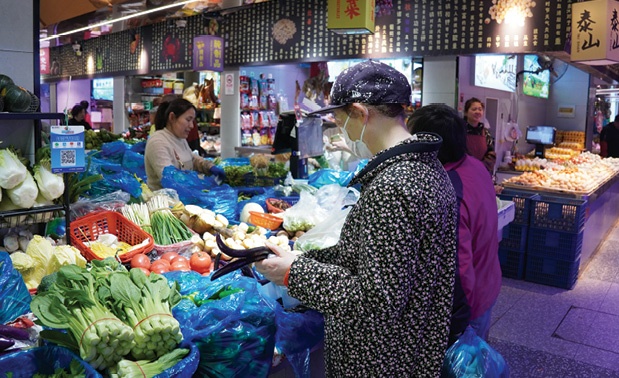
Since its soft opening on May 1, 2025, Yongchang Market boasts a clean and bright shopping environment.
Global Models in Action
Vibrant neighborhoods are always anchored by authentic local businesses. Yongchang Market not far from the Taishan People’s Neighborhood, bearing decades of memories, has undergone a subtle yet profound modern transformation. Shedding its old, shabby appearance and empowered by smart technology, it has become a vibrant heart in the local area.
The renewed 2,200-square-meter market is divided into a food zone and a fresh produce zone, with fully upgraded lighting, ventilation and sewage systems. Home to 89 merchants, it integrates fresh groceries, catering, and daily convenience services. Every stall is equipped with QR codes for food traceability, creating a clean, bright shopping environment.
Since its soft opening on May 1, 2025, monthly visitors have surged from 58,000 to 108,000, and the monthly turnover has jumped from RMB 1.5 million to RMB 2.08 million – a 38 percent increase in revenue. The formerly scattered, largely vacant stalls are now fully occupied, with most vendors seeing their revenues double.
According to Shi Yimeng, general manager of Shanghai Chengshi Industrial Co., Ltd., the operator of Yongchang Market, smart technologies have redefined the market’s operation model and greatly reduced waste. Standard payment codes are integrated into AI-enabled smart scales across the market. Real-time transaction data is clearly displayed on smart digital screens. With full Wi-Fi coverage, utilities such as water and electricity can be managed remotely via mini-programs or mobile apps.
Yuan Xiaolan, a pork vendor who ran a stall at the old market for over three years, chose to return after the renovation. “The environment is so much better and far more tech-enabled. I can check the big screen to decide how much stock to order for the next day, so my produce stays fresher. Even young people now love coming to shop regularly,” she said.
Outside Yongchang Market, a distinctive bus-like structure stands on the public square to encourage vendors to join in co-creation. Every month, local residents rate vendors via an Honesty Star Assessment. Merchants who earn five-star ratings three times in a row receive rent reductions and priority access to operate the “bus”. Besides, regular pre-sales, food tasting and other events are also held here. These efforts motivate vendors and make neighbors bond together.
Centered around the market, a canteen, a 24-hour supermarket, childcare facilities, and a senior activity room have also come into being, creating a complete 15-minute life circle that brings convenient services within easy reach of all residents.
Residents’ Input Important
The rebirth of any neighborhood is never just designers’ indulgence; it’s also collective work by all residents. After all, people who really live there know best how it should be reimagined.
A canteen, an activity center, and more parking spaces…These simple, heartfelt wishes have all been incorporated into the renewal blueprint. Prior to the renovation, the sub-district held 12 resident consultation meetings and collected more than 3,000 suggestions.
The 16 new flexible parking spaces at the Hutai Road entrance are a product of collective wisdom. Used by teachers from the Yichuan Middle School Affiliated Campus during the day and open to local residents at night, they meet some of the parking demands across different times of the day.
Residents’ other specific needs are also well handled: 57 creaking doors and windows have been restored, 12 activity areas upgraded, and security fences repaired for seven households. Furthermore, 18 underused spaces, including old bicycle sheds and alley corners, have been transformed into gardens or service stations.
Resident representatives oversaw construction quality throughout the renovation, and have since taken part in garden maintenance, community management and event organization. This model of co-creation, co-governance and shared benefits aligns with the best practices for urban regeneration advocated by UN-Habitat.
“This is our home, designed with our own input – that’s why we cherish and look after it so deeply,” said local resident Du Xinhua.
Old Neighborhood to Re-Connect
What makes a city truly unforgettable eventually boils down to two things: its unique diversity and its human connection. Shanghai perfectly embodies both.
The true essence of urban regeneration has never been to erase the past and start from scratch, but to embrace imperfections and make something of them.
As walls are opened up to reconnect alleys and restore public spaces, leftover corners are turned into gardens, and local markets upgraded to improve amenities, residents engaged in joint decision-making to foster community bonds.
Today, the neighborhood stands as a vivid model of micro-renewal in Shanghai. It represents a time-tested old neighborhood regeneration solution infused with Chinese warmth. Amid the everyday vibrancy of Putuo District, this former workers’ village is writing a brand-new chapter of its never ending story.