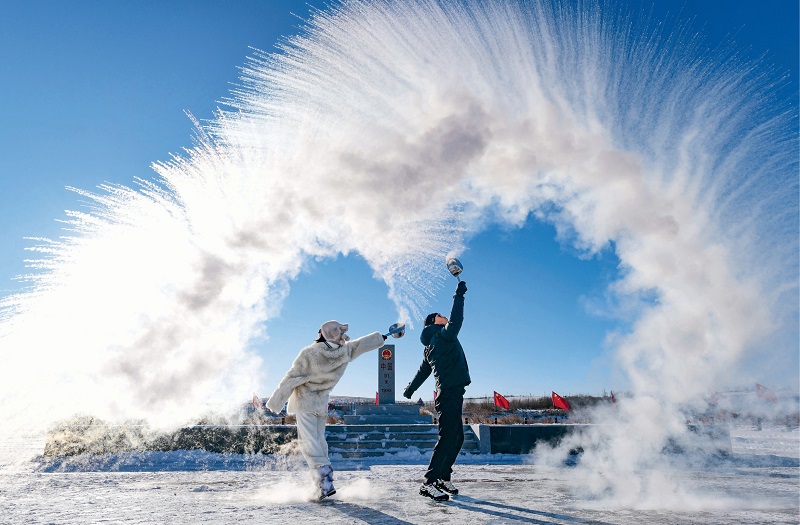
Tourists try the “instant water-to-ice” activity at the Heishantou Port Scenic Area in Ergun, a county-level city in Hulunbuir City, Inner Mongolia, on December 23, 2025.
China’s winter sports boom is expanding beyond its traditional northern heartlands, fueling a dynamic ice-snow economy and culture nationwide. This seasonal surge is driven by sustained investment and innovative development models that are turning cold climates into hot economic opportunities.
In the north, key regions are developing various winter activities that are based on their traditional strengths. Xinjiang’s Altay region in northwestern China has launched its season early this winter through successive resort openings, backed by continual local investment. Jilin in northeastern China has enhanced the visitor experience with new slopes, tourism vouchers, and the all-weather services. Hebei’s Chongli, capitalizing on its Winter Olympics legacy, hosts international competitions and youth camps, sparking greater public enthusiasm for winter sports.
China’s southern regions are overcoming climatic constraints through innovative business models. In the Yangtze River Delta area, for example, ski-centered training programs, family-friendly hotels, and cultural derivatives have formed an industrial cluster that leverages the area’s manufacturing prowess.
This cross-sector integration, spanning sports, culture, wellness, education, and transportation, is creating full-chain, all-scenario consumption ecosystems. Activities from skiing and ice sculpting to snow-themed trains and concerts have become integral to a modern, prosperous lifestyle during the winter months. By extending consumption chains while activating high-end demands, the ice and snow industry has become a powerful engine for stimulating high-quality economic growth.