Xujiadai is an administrative village in Lindai Town of Jiaxing City, east China’s Zhejiang Province. It is in this small village that over 100 baseball and softball tournaments have been held, a record that has crowned it China’s top baseball village.
“The Xujiadai International Baseball Stadium is scheduled to host 24 high-level events in 2026, for which preparations are currently in full swing,” Mo Yun, head of the town’s publicity affairs, told China Today.
How can baseball, a niche sport in China, become a driving force for rural revitalization? The story of Xujiadai Village may offer some insights.
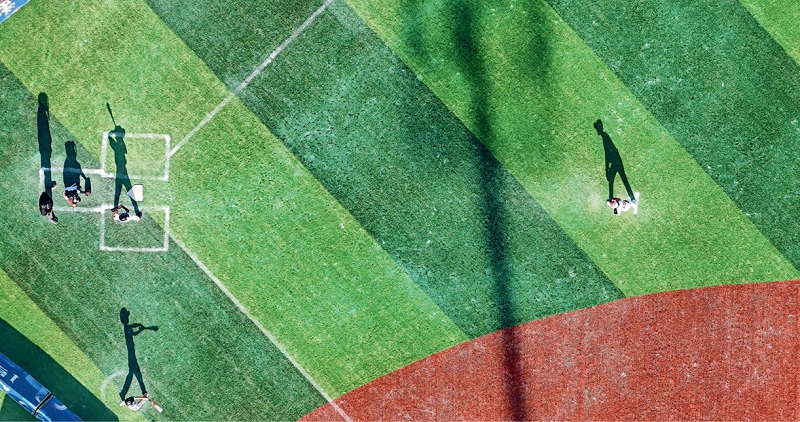
An aerial view of the Xujiadai International Baseball Stadium.
The Turning Point
A decade ago, most villagers in Xujiadai made their living by raising pigs, and environmental issues were prominent. As China advanced a nationwide initiative to improve rural environment, Liu Jianqun, the newly appointed village Party secretary in 2017, faced a pressing question: How can sustainable development be achieved after improving the village’s appearance?
The turning point came from a keen observation. At that time, Pinghu, the county-level city in Jiaxing which Xujiadai is part of, had attracted a cluster of enterprises invested by Japanese and Taiwanese businesses.
Liu, who had previously worked as a corporate professional manager, knew well that these businesspeople often traveled to Shanghai on weekends to play baseball and socialize through the sport.
Coincidentally, after the village’s pig farm was cleaned up, a low-lying, waterlogged plot of land at the village entrance had long been left idle. A bold idea emerged: “Why not transform it into a baseball field? It could serve as an attraction for businesspeople while promoting sports, culture, and tourism, a win-win situation.”
Once the plan was set, action followed immediately. From site surveys and planning to land acquisition and construction, Liu led the villagers in overcoming numerous challenges. In just a few months, a “created-out-of-nothing” youth baseball field emerged in the midst of the farmland.
The stadium officially opened in November 2018 and soon hosted its first event – the Third Little Deer League (Jiangsu-Zhejiang-Shanghai) Autumn Baseball Tournament. The scale of over 20 participating teams took Liu and his team by surprise.
“We never imagined that this seemingly ‘niche’ sport could attract so many enthusiasts,” Liu recalled.
A Tournament Hub
Initially, Xujiadai was little known in the baseball world. In 2019, the village hosted a national youth tournament, which caught the attention of the Chinese Baseball Association. After an on-site inspection, an association official remarked in admiration, “It is unique in the entire country for a village to prioritize baseball to such an extent!” From then on, high-quality competition resources began to gather here.
Starting in 2020, the National Youth Baseball Championship has been held in Xujiadai regularly, earning the village the reputation as China’s No.1 Baseball Village.
As the scale of events continued to expand, the original youth baseball stadium gradually became insufficient. Xujiadai Village decisively invested RMB 50 million to begin construction of an international-standard baseball stadium. In July 2025, the 12,500-square-meter international baseball stadium officially opened, doubling the size of the original venue and marking Xujiadai’s capability to host international adult baseball and softball competitions.
To date, the village has hosted over 100 baseball and softball events of various kinds, establishing itself as a highly influential rural sports center in the Yangtze River Delta region and across the country.
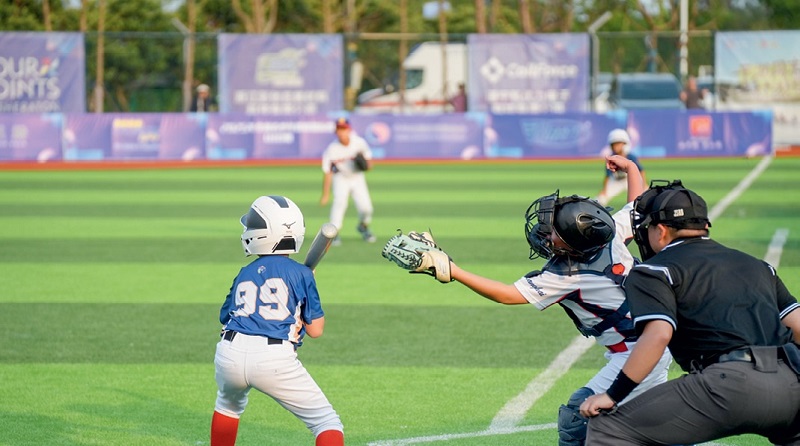
A teenager baseball game is held at Xujiadai International Baseball Stadium.
Greater Benefits
The economic benefits brought by baseball have been immediate. Mo related an example, “Take the National Youth Baseball Championship U10 (under 10 years old) group for instance – 52 teams over a 20-day tournament generated over RMB 4.5 million in total revenue.”
The radiating effects of the tournaments are even broader. During events, customer traffic at local agritainment spots triples, agricultural products are sold out through pre-orders, and even hotel occupancy rates in downtown Pinghu get a boost.
During the peak tournament season, the entire village focuses on “event-plus” consumption, fully supporting services like homestays and catering. In the off-season, it shifts to developing products such as “baseball team-building packages,” “study tour routes,” and family-friendly offerings like “baseball training plus fruit/vegetable picking” and “one-day baseball park tours,” enabling sustainable development for local businesses all year round.
The village’s industry is also upgrading. A new multi-purpose center built next to the stadium integrates exhibitions, wedding banquets, vacations, and team-building activities. In just the first half of 2025, it hosted over 200 events. Its lawn wedding service is already booked through 2028.
In 2024, Xujiadai Village received 960,000 tourist visits. Today, the village has formed an integrated industrial chain encompassing baseball tournaments, sports and leisure, dining and accommodation, agricultural picking, and cultural experiences, providing over 500 local jobs annually.
The village’s collective income has grown from about RMB 1.3 million in 2018 to over RMB 6.9 million in 2024, with projections to exceed RMB 8 million in 2025.
Rooting in Rural Life
Baseball has become not only an economic pillar of the village, but also part of local people’s life. Soon after the stadium was built, the town-level authorities of Lindai selected over 40 students to form the “Little Dragons” baseball club. Today, a youth training system covering ages U8 to U18 has been established locally.
The “Little Dragons” team has since won 18 championships. In 2023, they represented China to participate in the 41st U12 Men’s Soft Baseball World Championship in Japan, where they secured second place.
To make the sport more accessible, the village has promoted the easier-to-learn “five-player baseball” games and organized farmer baseball tournaments. In 2025, these events were expanded to neighboring townships for the first time, attracting over 100 participants.
Xujiadai has also creatively integrated baseball with local intangible cultural heritage, such as the dragon dance “Nine-Colored Dragon” and the water-based competition “Speedy Boat Racing.” During major tournaments or festivals, these traditional Chinese activities are performed alongside baseball games, enhancing the events’ appeal.
Xujiadai is only one of the regions in Zhejiang that is using sports events to boost local development. The province is developing distinctive sports industries as a means to promote urban-rural integration and common prosperity, having established several specialized sports townships like Qingliangfeng for outdoor sports and Guanhaiwei for paddle-boarding.
“The Xujiadai model is reduplicated and scalable,” Mo concluded. “The key lies in selecting a unique focus areas, executing precise positioning and professional operations, ultimately achieving a win-win outcome of strengthening the village, enriching residents, and fostering rural-urban integration,” he summarized.