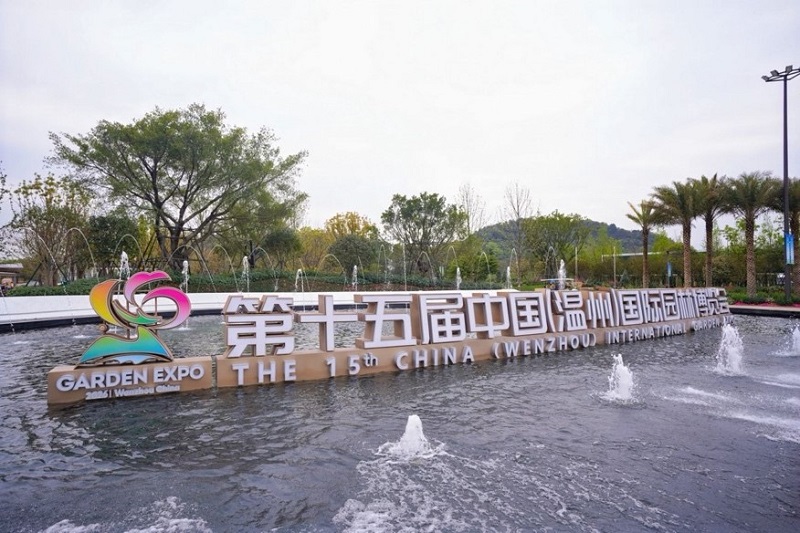
It is a magical time when visiting a grand expo just before it officially opens. There is a sense of organized chaos with workers still rushing about making final adjustments, and the air hums with anticipation rather than crowds of visitors. This week, I had the rare privilege of walking through the grounds of the 15th China (Wenzhou) International Garden Expo exactly seven days before the doors opened to the public in Wenzhou, Zhejiang Province. What I found was a living, breathing network of pavilions and gardens already beginning to tell its story — one of accessibility, cultural harmony, technological wonder, and above all, a deep and abiding love for nature.
A Landscape That Welcomes Everyone
The first thing that struck me was how effortlessly the expo grounds invited exploration. Accessibility has clearly been a priority from the earliest planning stages. Wide, gently sloping pathways are designed not merely for convenience but for genuine inclusivity— whether pushing a stroller, using a wheelchair, or simply ambling at a leisurely pace.
Designed to make visitors find each pavilion open and welcoming, signage is clear and bilingual. The grounds feel like a natural extension of Wenzhou’s own landscape — a place where each person can take their own time to see the beauty of each pavilion.
The designing of the decorative flower beds exhibits the foresight embedded in the planting itself. According to one of the designers, the flower gardens have been designed to bloom in different seasons that go far beyond the exhibition’s official run (April-July, 2026). The message is unmistakable: this expo is not a temporary spectacle. It is a lasting gift to the city — a public garden that will transform with the calendar, offering beauty in every season for years to come.
Pavilions That Speak of Home and Faraway Lands
Inside the international garden area, 11 international gardens represent Italy, the U.K., France, Uzbekistan, Canada, Thailand, the U.S., the Netherlands, Japan, the International Federation of Landscape Architects (IFLA) and the Maritime Silk Road. The U.K., the U.S., France, Italy, Thailand, Uzbekistan, Japan, Canada, and the Netherlands — nine countries, nine distinct horticultural voices. Walking from one to another felt like flipping through a beautifully illustrated atlas.
The English pavilion evokes the romantic charm of a cottage garden, while the French pavilion is all structured elegance and precision. Italy’s pavilion meanwhile, shows the iconic Italian step gardens which blend Renaissance architecture with nature through terraced designs. Thailand brings tropical exuberance through orchids and intricate wooden carvings, in contrast to the Uzbekistan’s Silk Road ambience of geometric patterns and shaded gazebos. Japan’s pavilion displays bonsai trees in front of traditional background architecture featuring round windows. The structure of the Netherlands pavilion focused on a white windmill surrounded by tulips. The U.S. pavilion focused on home gardens, and the Canadian pavilion focused on urban gardens that can fit into urban contexts. Each pavilion gave a unique perspective to appreciating nature and gardening.
According to the chief designer of the Wenzhou International Garden Expo, Yu Wei, chief landscape engineer of the Zhejiang Urban and Rural Planning Design Institute, inside of the international garden area, there are five worldly renowned garden genre parks: the Islamic garden (exhibited in the Uzbekistan pavilion), French garden, Italian garden, English garden, and Japanese garden on the one side, with four pavilions of cities from countries that have friendly exchanges with Wenzhou, including the U.S., Canada, the Netherlands, and Thailand. While these cities may not have distinctly defined garden genres, they still possess unique garden landscapes or urban characteristics.
As you walk through this section, you are impressed with how the design of each pavilion respects the ground beneath it. Xu Jing, deputy general manager of Wenzhou Urban Development Group (Construction Party), said rather than bulldozing the original geological contours and creating various extravagantly designed layouts, the designers followed the natural rise and fall of the earth. Pavilions are nestled into hillsides, and water features follow existing drainage patterns — the design philosophy encourages visitors to maintain respect for the land and nature in gardening.
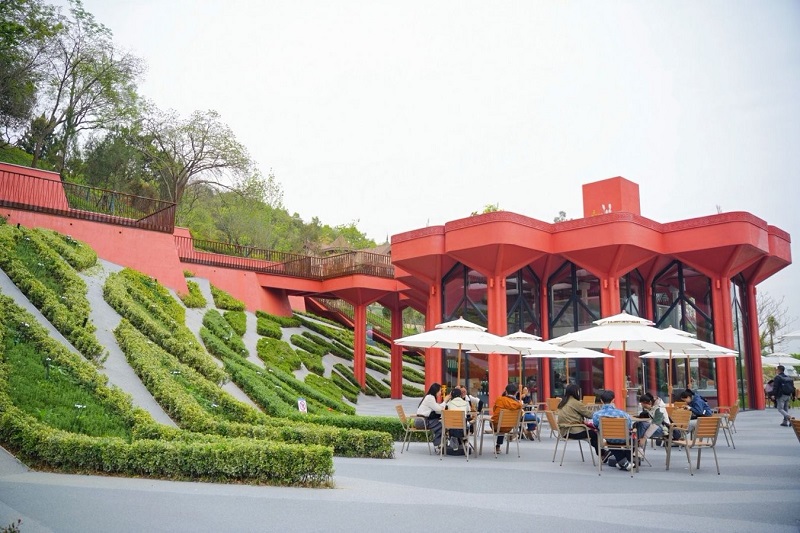
The Italian pavilion located the international section of the Wenzhou International Garden Expo exhibiting the classical Italian step gardens behind it on April 8, 2026.
The Unexpected Classroom: Children Among the Flowers
Even one week before opening day, the expo was already being used for educational purposes. I encountered groups of primary school students, walking in neat lines with their teachers through the grounds, wide-eyed and pointing excitedly at fish in the pools and flowers in the gardens.
Different from a field trip to a finished museum, this was learning in real time in a living laboratory. And it struck me that this is perhaps the most valuable legacy of any garden expo: not the trophies or the headlines, but the quiet way it plants curiosity in young minds. These children will remember visiting before the crowds came. They will remember the smell of damp earth and fresh blossoms. Some of them, years from now, may have gardens of their own or become botanists or landscape architects who shape China’s green future.
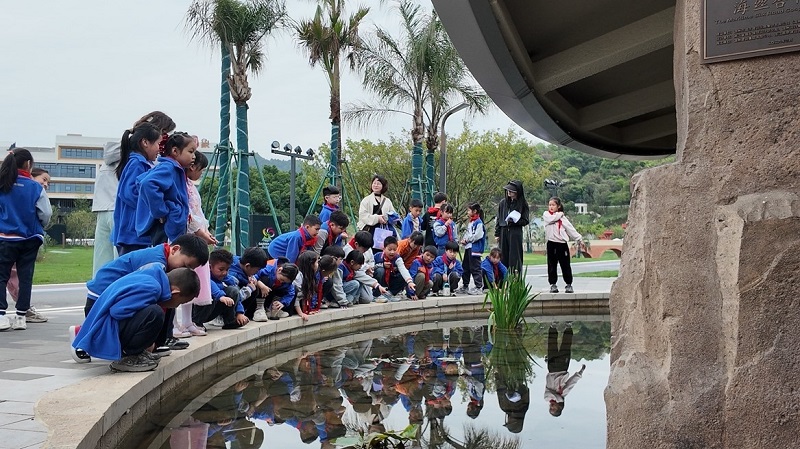
A group of primary school children visiting the grounds of the Wenzhou International Garden Expo on April 8, 2026.
Where Technology Meets the Soil
If the international pavilions celebrate tradition, other sections of the expo grounds are boldly looking forward. In addition to respecting nature, I also saw examples of combining new technology to better care for plants and create more ideal gardens.
One fascinating example was the AI Community Garden Area. China Today learned that local Wenzhou residents were invited to design their ideal gardens using AI tools — dreaming up layout and plant combinations. Those AI-generated designs are now being constructed on the ground, free of charge, by local architectural companies. It is a remarkable collaboration: AI helping locals to provide the blueprint, human hands bringing it to life, and the community benefiting from the result. The future of gardening does not need to be a choice between human creativity and machine precision —in Wenzhou, they work together.
More Than Flowers: A Cultural Platform for the Ages
As I walked the grounds watching workers plant the last few shrubs and students marvel at vibrant flowers, I began to understand the full ambition of the 15th China (Wenzhou) International Garden Expo. This is not merely a flower show or tourist attraction. It is a platform on which multiple cultures display their relationship with the natural world.
For local residents, the expo offers enrichment that extends far beyond a single visit. Community gardens, educational programs, seasonal festivals, and ongoing workshops will keep the grounds alive with activities long after the official exhibition period ends. For visitors from across China and around the globe, the expo provides an opportunity to learn not just about garden designs from China and other countries, but about China itself — its horticultural heritage, its respect for nature and its use of smart technology to create efficient gardens.
Being at the expo one week before opening, surrounded by flowers that will bloom for years and pavilions that honor both their home countries and their adopted landscape, I felt a genuine sense of excitement. The 15th China (Wenzhou) International Garden Expo is ready. The children have already spread their joyful appreciation. The gardens are already growing. Next, the world will arrive.