On March 7, Liu Rui, deputy to the National People’s Congress (NPC), China’s top legislature, vice president of the Yangtze Delta Region Institute of Tsinghua University, Zhejiang (YDRI), and director of its Department of Environmental Technology and Ecology, sat down with China Today during the Two Sessions to share her story of two decades in the Yangtze River Delta, where she has been dedicated to aquatic ecological governance.
Born in 1973, Liu completed her undergraduate, master’s, and doctoral studies at Tsinghua University before spending six years working in Japan. In 2007, at the invitation of a Tsinghua alumnus, she returned to China to join the then-newly established Department of Environmental Technology and Ecology at YDRI.
“The Yangtze Delta Region Institute of Tsinghua University is a new type of innovation platform personally conceived, named, deployed, and promoted by President Xi Jinping during his tenure in Zhejiang,” Liu said. Co-founded by the Zhejiang Provincial People’s Government and Tsinghua University, the institute aims to address the social and economic development needs of Zhejiang Province and the wider Yangtze River Delta region. Through technological innovation and services, talent cultivation, and high-tech commercialization, it fulfills Tsinghua University’s commitment to social service, driving the region’s economic transformation and contributing to its sustainable development.
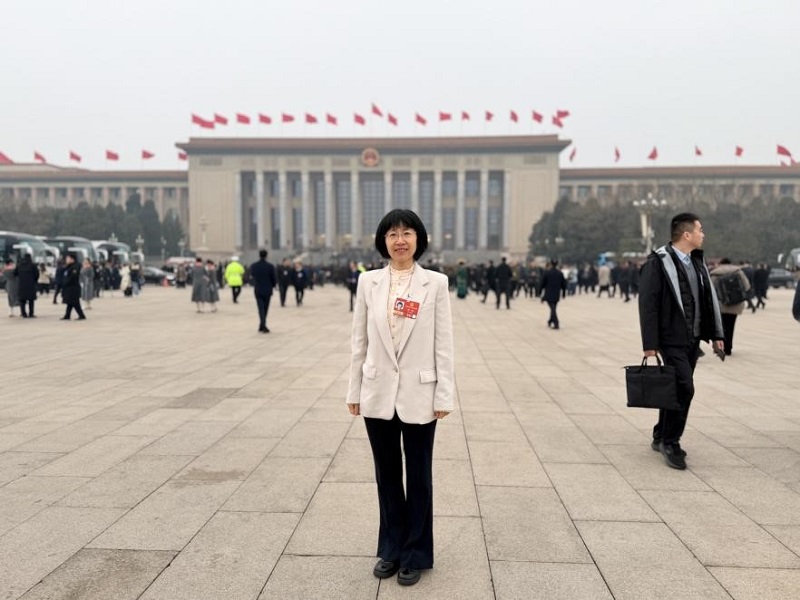
Liu Rui, deputy to the National People’s Congress (NPC) from Jiaxing, east China’s Zhejiang Province.
A Tsinghua Water Conservator’s Original Aspiration
Liu recalled: “The institute’s leadership came to Japan to invite me, describing Jiaxing as exceptionally beautiful, and emphasizing that this Tsinghua-built institute would allow me to freely choose my research direction. During my time in Japan, I had admired their water recycling systems and urban green space development. I was determined to ‘bring that beauty back home,’ so that my family and friends could also enjoy a life surrounded by clean water and greenery. So I quickly made up my mind to return.”
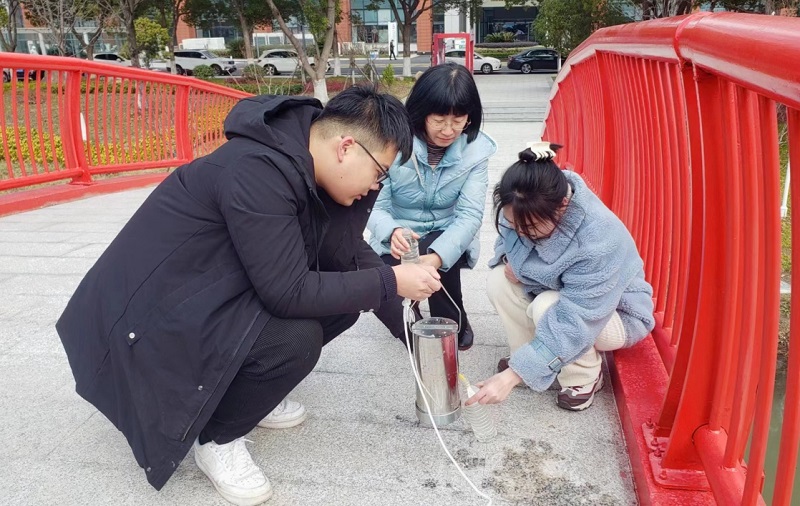
Liu Rui (center) collects water samples with colleagues by the river.
The Yangtze River Delta boasts China’s highest density of river networks, with crisscrossing waterways and scattered lakes amid densely populated, clustered cities. Jiaxing, where YDRI is located, sits at the junction of Shanghai, Jiangsu, and Zhejiang. Viewed from above, its interconnected waters resemble scattered stars and strung pearls.
However, Liu had underestimated the challenges of managing this water town’s river system. When she began her field research in Jiaxing, she discovered that this seemingly idyllic water town actually offered one of the most difficult projects in China’s water environmental governance.
Jiaxing sits at the lowest reaches of Taihu Lake, serving as a flood discharge channel for the Hangzhou-Jiaxing-Huzhou Plain. Eighty-five percent of its water sources come from upstream, leaving it with no clean water replenishment of its own. Compounding the problem, this typical flatland river network encompasses over 20,000 interlaced waterways that function like capillaries, with extremely poor water mobility that easily turns them into pollution carriers. Historically, numerous sluice gates built for flood control have further fragmented the water bodies into relatively static “compartments,” exacerbating governance challenges.
“Jiaxing represents a classic case study in water management,” Liu noted. She explained that while rapid economic and social development constantly brings new changes, topographical constraints have historically left Jiaxing facing water quality-induced scarcity despite its dense river network.
“Water seemed to be everywhere, yet qualified surface water was scarce.” She pointed out that the thriving aquaculture industry, large-scale pig farming, along with agricultural non-point source pollution, industrial wastewater, and domestic sewage created an intertwined web of challenges.
Yet it was this sense of being “needed” that convinced Liu to stay. As one of the first batch of experts sent to Jiaxing from major institutions and prestigious universities, she received unprecedented respect and support. “People around me were remarkably courteous and supportive. That feeling of being wanted and needed motivated me to stay,” Liu said.
Tackling Global Challenges in the Field
Liu soon discovered that while Jiaxing’s water governance challenges were immense, the city served as an ideal “experimental field.” This complexity drove technological innovation, and the local people’s yearning for clean water created a perfect working environment. “Government agencies were remarkably cooperative, water utilities highly professional, and the entire community was focused on solving the water problem. This strong demand was unmatched anywhere else,” she observed.
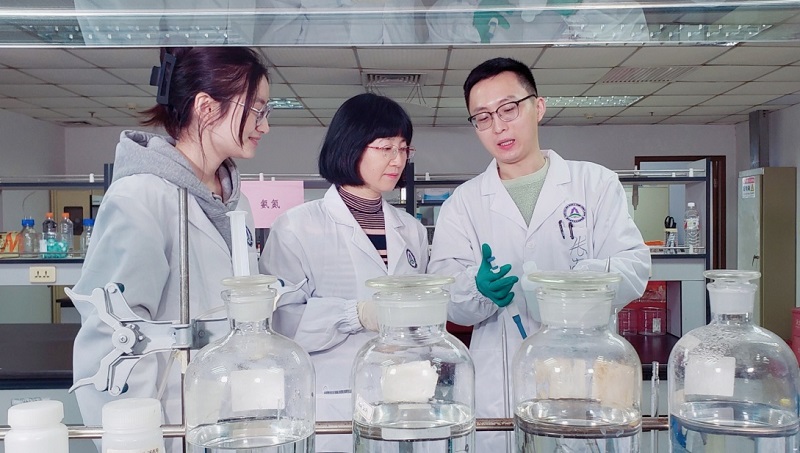
Liu Rui (center) conducts research with her team members in the laboratory.
Over two decades, as head of the Zhejiang Provincial Key Laboratory of Water Science and Technology, Liu led her team across all five counties and two districts of Jiaxing, surveying 14,700 kilometers of rivers and nearly 100 surrounding industrial parks, completing over 10 major national and provincial-level projects, and winning numerous scientific and technological awards and invention patents.
“This wasn’t work that could be completed in a year or two, but a protracted campaign of persistent efforts,” she said. In the early days, Liu and her team conducted extensive manual water quality monitoring, searching for upstream-downstream correlation patterns in the interlacing river network and establishing predictive models. As environmental protection investment increased, Jiaxing built a comprehensive online monitoring system, with city- and county-level monitoring stations forming a vast data network.
“Now we use AI algorithms and intelligent technologies to conduct deep mining of these massive datasets,” Liu said. “For example, if water quality deteriorates in a particular area during rainfall, it suggests potential problems with the underlying underground pipe network. Sluice gate operations during special periods have
tremendous impact on cross-section water quality. Through these correlation analyses, we can precisely identify key pollution areas and critical time periods, transforming ‘searching for a needle in a haystack’ into ‘precise diagnosis’.”
She emphasized that this “data mining” was not simply technological application but “integrated innovation” requiring deep integration with local characteristics. Every location needs tailored solutions. For instance, industrial parks vary in their situations, but when digitization reaches a certain level, patterns emerge for each.
“In the future, if we can connect underground pipe network information with above-ground river network information, integrating all environmental data above and below ground, we can achieve even more precise control,” she predicted.
This “detective-style” governance approach is a daily routine for Liu’s team. Discovering anomalies in data, tracing pollution sources, then using specific technical means to verify and refine, ultimately forming implementable solutions. Over 20 years, they tackled one challenge after another in this Jiaxing “experimental field,” witnessing a historic transformation in water quality, from predominantly Class IV and V water at first to 100 percent Class III water today, making it a benchmark for water environmental governance in the Yangtze River Delta region.
From Jiaxing Practice to a Great Nation’s Code
In 2018, Liu was elected an NPC deputy, serving consecutive terms in the 13th and 14th NPCs. Moving from the laboratory to the Great Hall of the People, her perspective expanded from individual rivers and lakes in Jiaxing to the broader picture of national ecological civilization development. Each year when attending the sessions in Beijing, she carries weighty proposals, all stemming from her long-term front-line practice and reflection.
This year, she brought two environment-related proposals. One concerns “dual carbon control.” As the nation shifts from “energy consumption dual control” to “carbon emission dual control,” she called for promptly improving carbon evaluation standards, project access standards, and carbon trading market mechanisms, “giving enterprises the motivation and options to actually reduce carbon emissions.” The other one focuses on water environmental governance in urban renewal, particularly the systematic renovation of stormwater and sewage pipe networks, what she terms the “urban venous system.”
“These pipe networks have been in place for three to four decades now, with many entering the renewal phase. But pipe networks are highly systemic; managing them according to traditional administrative divisions lacks a holistic perspective. The problem areas aren’t necessarily where investment is most readily available,” she noted.
Therefore, she proposed that systematic governance requirements must be established at the legal and institutional level, with projects adopting a broader perspective, not taking individual towns as units, but implementing full-chain closed loops of overall diagnosis, precise investment, and post-evaluation rectification. At the same time, she emphasized clarifying operation and maintenance funding guarantees and management mechanisms to make sure there is specific department taking care of the problem.”
As a witness to these years of development, Liu looks forward to the adoption of the Draft Environmental Code of the People’s Republic of China. “To my knowledge, this will be the world’s first law designated as an ‘ecological and environmental code,’ and also China’s second code after the Civil Code,” she said.
The draft code, which is under deliberation, comprises five sections and 1,242 articles, covering everything from traditional pollution prevention to ecological protection, green low-carbon development, and legal liability, embodying the defining characteristic of “enhanced systematic integration.” This can better promote upstream-downstream coordination in river basins and regional coordination, achieving the integration of high-quality development and ecological protection,” Liu said.
She particularly highlighted the code’s forward-looking nature: incorporating green low-carbon development and natural resource protection, combined with the institutional advantages of China’s Five-Year Plans. “The draft outline of the 15th Five-Year Plan (2026-2030) proposes 20 main indicators. Among them, for green and low-carbon development, five indicators are proposed around carbon reduction, pollution reduction, and ecological environmental protection. Additionally, there are NPC oversight systems to ensure implementation, all reflecting Chinese governance wisdom and China as a major responsible country,” Liu said.
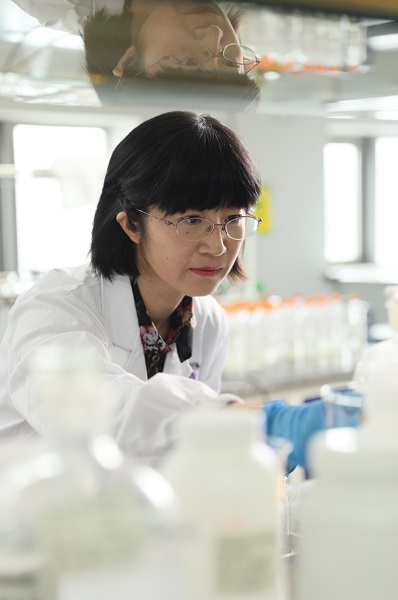
Liu Rui in her laboratory.
Protecting Lucid Waters and Lush Mountains for Future Generations
While discussing the governance achievements over many years, Liu highlighted some transformative changes visible to ordinary people.
“When I first returned in 2007, water quality was very poor, with much of it being Class IV and V. Now, the proportion of Class III water quality sections nationwide has exceeded over 90 percent. Jiaxing, situated at the lowest reach of Taihu Lake and representing the region with the highest production and living density in the Yangtze River Delta, has achieved 100 percent Class III water quality. Even small rural streams now run crystal clear, something unimaginable before,” she said. “Places that were once stinky ditches have become leisure spots for urban and rural residents. The concept that ‘lucid waters and lush mountains are invaluable assets’ has found vivid expression here.”
Air quality improvement is equally tangible. “There was a period when air quality was poor, but now there are more days with good air quality,” she noted. More gratifying still is how environmental governance has spurred rural development. “Once, in the densely populated and land-scarce Yangtze River Delta, rural green spaces were increasingly scarce. Now, with improved rural environments, people are leveraging ‘lucid waters and lush mountains’ to develop homestays and rural tourism, generating income. These changes are concrete and more convincing than mere statistics.”
Behind these changes lies substantial national investment in environmental protection and the unwavering dedication of countless environmental professionals like Liu. From initial manual monitoring to today’s AI-powered intelligent analysis, from single-point intervention to systematic approaches, and from local practice to national legislation, Liu’s dream of “bringing beautiful scenery back home” is gradually becoming reality.
“I feel incredibly fortunate,” Liu said. “Jiaxing gave me a free space for exploration, a complex and challenging experimental field. I have worked here for nearly 20 years and developed deep attachments. Being able to apply what I have learned to my hometown’s development and see the water town truly become a ‘water town’ – that’s the greatest sense of achievement.”
Now, at the Two Sessions, Liu’s thoughts still return to those rivers in the water town. Her proposals contain careful consideration of carbon market mechanisms, systematic visions for pipe network governance, and persistent pursuit of harmonious coexistence between human and nature. From Tsinghua University to the water towns of the Yangtze River Delta, from laboratories to the Great Hall of the People, this water conservator has proven through her dedication that tackling the hardest challenges can indeed protect lucid waters and lush mountains for future generations.