In an era when even once-proud industrialized nations battle to ensure jobs, pensions, and a secure future, the enviable story of a country that rose from a developing nation marked by widespread poverty to a global economic power in the short span of fifty years offers a ray of hope.
When I first traveled with my parents to China in the mid-1980s, poverty was visible everywhere. In many places, there were more bicycle lanes than roads. People wore very simple, plain clothing and in large cities, living conditions were usually extremely cramped. Migrant workers often slept in shifts in the same bed and leisure time was virtually unheard of to them. When it came to meals, meat was considered a luxury.
Today, decades later, when I meet older people in China who once labored in the fields or factories, I often misjudge their age. Chinese people often look much younger than they are, but these individuals appear ten or fifteen years older than their actual age. They look worn out, as if the life has been sucked out of them.
And yet, you can see peace and contentment in their eyes. They have built something for their children and grandchildren and are proud to have been part of the greatest social transformation in human history.
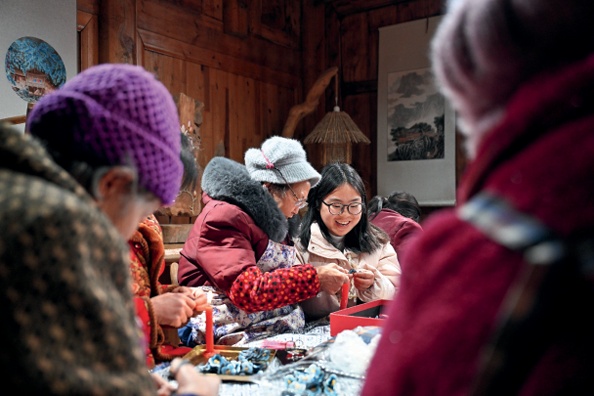
He Quanyan (fourth from left), a Gen-Z college graduate majoring in Tourism and Hotel Management who now serves as a “Rural CEO” in her hometown, helps villagers at a local embroidery workshop on March 6, 2025.
A Miracle Largely Unknown
Poverty is not a natural condition or a person’s destiny. It can be overcome through sound political decisions, something irrevocably proven by China.
More than 800 million people in China have been lifted out of poverty over the past roughly 50 years. Assisted by the tremendous effort of an entire population, the main reason for this success was sound policy: investment, reforms, and opening up for the benefit of all Chinese.
At the same time, it was also the single greatest contribution to global poverty reduction. More than 70 percent of the worldwide reduction in extreme poverty during this time can be attributed to China. Regrettably, anyone who searches online for “poverty reduction China” will nevertheless find surprisingly little information – even in English. It would be worthwhile discussing whether such an enormous undertaking requires a strong state – and if so, what form it should take.
A strong state that intervenes and steers the path forward is only meaningful if political decision-makers are wise, competent, and committed to the common good. This requires a genuine elite, in the sense of merit-based selection.
Good policy is easy to recognize – namely by its results. Growth must reach the broader population, not just a few super-rich individuals. China relied on action rather than prolonged debate. With the strategy of “targeted poverty alleviation,” every affected household was identified and supported accordingly. Millions of officials and communists went into the rural areas to determine exactly what was lacking and how it could be rectified. Poverty was therefore not merely administered, but overcome step by step.
Poverty and inequality declined significantly as incomes in villages rose noticeably. This was no coincidence, but the result of political decisions. What proved decisive was the approach of focusing on development and helping people to thrive on themselves, rather than relying on permanent outside support. The aim was to teach people how to fish, not to bring them fish from elsewhere.
China demonstrated how common sense, holistic thinking, and pragmatism work hand in hand. For remote, sparsely populated regions, there were both short- and long-term solutions. In the short term, this meant relocating people or bringing in experts and essential goods. In the long term, it meant improving connectivity to these areas.
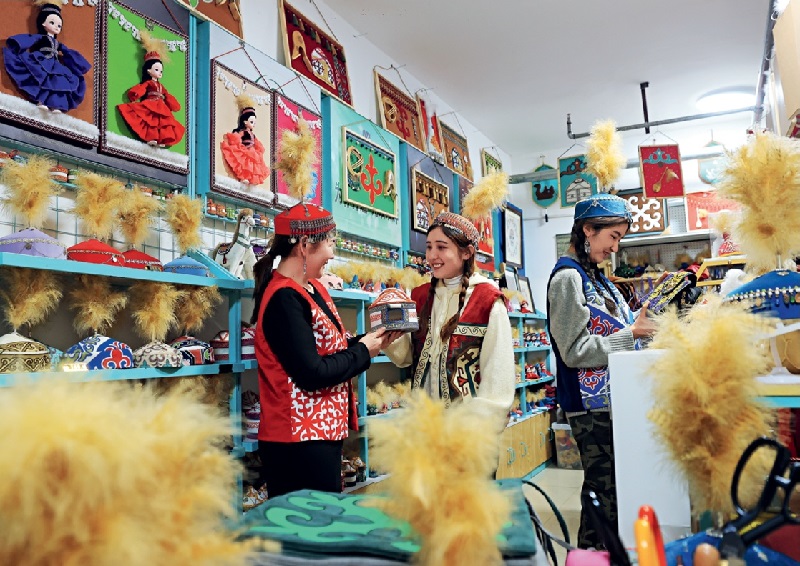
 Xinjiang: An Example of Success
The Xinjiang Uygur Autonomous Region, where the Turkic-speaking Uygurs form the largest population group, is a case in point. Today, it is a logistical hub between China and Europe. Since the launch of the China-Europe freight rail connections in 2011, more than 100,000 trains have passed through the border terminals of Horgos and Alashankou, with more than 10,000 in 2025 alone. That accounts for more than half of the total rail traffic between China and Europe. The numbers still continue to rise.
My impressions from the international land port of Urumqi confirm this. Xinjiang is no longer a remote peripheral region, but an economically significant hub. From here, connections to Europe are routed, helping the region develop dynamically.
My personal highlight was a visit to a car factory. Old Henry Ford would have taken great delight in the production line of the Chinese automaker GAC Motor. Cordless screwdrivers, hydraulic machines, small transport robots, and hammers created a harmonious concert in the large factory hall, repeatedly interrupted by the honking of newly finished and freshly washed cars.
The assembly plant of the Chinese automaker GAC Motor is located in the economic and technological development zone of Urumqi city. While at first glance this does not seem unusual, the company is headquartered in Guangzhou, in the southern province of Guangdong and has little to gain from assembling cars in the distant northern province of Xinjiang. Yet this is exactly what GAC Motor has been doing for several years. In 2012, the company became the first Chinese passenger car manufacturer to establish operations in Xinjiang.
The combination of infrastructure expansion, industrial development, and targeted support for the local population is no coincidence. Programs in which more prosperous provinces support less developed regions – so-called “pairing assistance” – play a central role. They bring capital, training, and skills. Studies show that this form of support has been crucial to the economic development of many regions in Xinjiang.
In the auto assembly plant, human voices were heard far less than the almost Christmas-like music played by a small transport robot to prompt workers and visitors to step aside. There was little conversation, as everyone worked in a focused manner and operations ran largely smoothly.
Workers swiftly installed tires and seats with the help of robotic arms, tapped rubber seals into place by hand, tightened screws overhead, and marked spots with a pen. The cars moved along the production line without tires, as they were held in fixtures and conveyed forward from above.
I learned that many of the workers are Uygurs. In Xinjiang, around 40 percent of the population are Uygurs – roughly as many as Han Chinese, the largest ethnic group in the country. In addition, there are over 50 other recognized ethnic minorities in the region.
Millions of Faces of Success
Only when jobs, education, and prospects are available locally can villages, cities, and provinces continue to develop.
The rise out of poverty with the prospect of modest prosperity has millions of stories in China. Alijan Tursun is one of them. I spoke with him at an agricultural cooperative for dates and walnuts where he works as the operations manager. Tursun attended school for only nine years before entering the job market. The father of three, who enjoys cultivating ornamental plants in his spare time, is someone who gets things done. Through smart decisions and hard work, he has already increased his family’s annual income from RMB 50,000 (around €4,000) to an impressive RMB 220,000 (around €28,000) – more than quadrupling it.
The enterprising Tursun keeps pace with the times and as the delicious walnuts fetch a much higher price when shelled, he plans to buy a nut-cracking machine. He is also planning to open his own business. He wants to sell tasty lamb and beef skewers across China, initially on a trial basis in Shanghai or Beijing.
Meanwhile, woodcarver Alim Osman has grown a small workshop into a medium-sized enterprise. Along the way, he has given his neighbors opportunities by training them in the art of wood carving, creating new sources of income in the village.
Poverty reduction works when favorable political conditions enable people to get ahead and then bring others along with them. Knowledge and skills are passed on, and structures develop organically.
These are just some of the many stories of the enormous leaps in development in the region. By 2020, around 3.06 million people in Xinjiang had been lifted out of poverty. In 2024, the average annual disposable income per capita stood at around RMB 42,800 in urban areas and about RMB 19,400 in rural areas. In 2025, the threshold of RMB 20,000 per capita was surpassed for the first time in rural areas, while urban incomes continued to rise to over RMB 45,000. At the same time, the income gap between urban and rural areas has continued to narrow.
Along with its rapid development, China places great value in diversity. In Xinjiang, Uygur culture is omnipresent – in bazaars, in music and dance, and in traditional crafts. I saw a great sense of joy in life, especially among the many dancers.
Culture is also an economic factor. Tourism only works if places do not look as though they have been cloned. Xinjiang has clear unique features, like the delicious naan bread and lamb skewers.
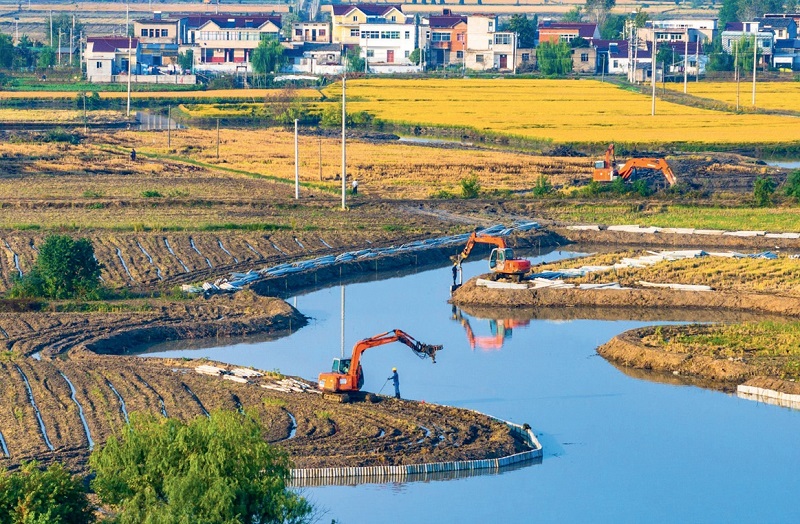
Workers are engaged in construction at the site of an irrigation project in Guoren Village, Pingpu Town, Fanchang District, Wuhu City, Anhui Province. The project involves building new irrigation pumping stations and information systems to renovate the existing infrastructure.
Every Family Has a Story to Tell
What satisfies many Chinese people is the broad participation in their country’s rise. Almost every family can point to progress – from the first university graduate to starting a business of their own.
Such stories can be told today because, since the 1970s and 1980s, China has invested heavily in infrastructure: railways, roads, digital networks, ports, train stations, airports, schools, and universities. The government has created access to markets, education, and employment across the country.
More than 800 formerly poor counties have therefore gained from economic opportunities. Short-term support may be necessary, but what matters most are long-term investments in a country’s foundations. It is important to note that China pursued its own path to growth. Rather than relying on wealth to “trickle down,” it invested directly in lower-income groups. The reduction in poverty is primarily due to rising incomes among those directly affected, facilitating the link between economic growth and social development.
What Comes Next?
Extreme poverty has largely been overcome, yet relative disparities remain. Creating equal opportunities for all is the next major challenge.
China is increasingly focusing on the development of rural regions. The issue is no longer simply putting food on the table. Quality of life and future prospects are now at the forefront. Both poverty reduction and the continuous improvement of living standards are understood to be a social responsibility.
If a country of 1.4 billion people can reduce poverty so drastically, an obvious question arises: why does this so often fail elsewhere? Why is poverty in many places worldwide managed rather than overcome? And how is it that even wealthy industrialized nations today struggle with child and elderly poverty?
In the end, it is a matter of priorities. 
NILS BERGEMANN is a journalist, editor and communication expert. A former employee of China Media Group, he currently teaches German, linguistics and economics at the University of International Business and Economics in Beijing.