Understanding the Principles of True Wealth.
China’s achievements show that true wealth comes from investing in the real economy and in people’s well-being, not from financial speculation or short-term gains. This approach embodies the principle of putting people first, a recurring theme in Xi Jinping: The Governance of China. China’s development progress is therefore no coincidence: by prioritizing industry, technological innovation and social welfare, it has steadily built real wealth.
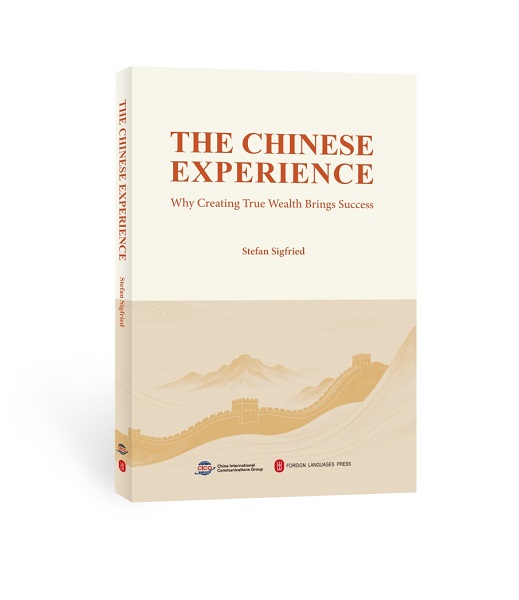
But what is real wealth? Western economics, shaped by Scottish economist Adam Smith’s treatise The Wealth of Nations, has distorted our understanding of it. In my 2008 book True Wealth of Nations, I developed this argument and coined the term “trealth” -- true wealth: the tangible wealth that makes life richer and more secure, of which money is at best a reflection. Realizing this concept could explain both China’s success and the West’s relative decline, inspired me to write China Unbeatable, which has since evolved into a substantially expanded and rewritten book, now published by Foreign Languages Press as The Chinese Experience: Why Creating True Wealth Brings Success.
The idea of "trealth" is central to the book, but it goes far beyond it. It explains why GDP fails as a measure of prosperity, why trust and social cohesion are the foundation of a healthy society, and why a country like China may be better placed to handle the AI revolution. The book also argues that the capacity to correct mistakes is a hallmark of good governance, citing the restoration of Erhai Lake as one example, and it examines the limits of ballot-box democracy. And there is more.

An aerial drone photo shows people visiting the Erhai Lake ecological corridor in Dali, southwest China's Yunnan Province, Aug. 21, 2026. (Xinhua/Hu Chao)
Most importantly, the book is an attempt to restore common sense. Its message is that the West has much to learn and China has much to teach. The central idea is that the West has lost sight of the importance of creating "trealth." China has not.
The problem with today's Western economic models is twofold: they are not anchored in reality, and they are not focused on creating prosperity. The Chinese Experience contrasts this with engineering, where the purpose is always clear — to build things that serve us well — and reality is an unavoidable test: the machine breaks down, the bridge collapses. Reality delivers its verdict.
Western economics has no such purpose and lacks a direct check, partly because of British economist Lionel Robbins's 1932 definition:
“Economics is the science which studies human behaviour as a relationship between ends and scarce means which have alternative uses.”
This framing of economics as the management of scarcity, trade-offs and constrained choices has shaped the discipline for nearly a century. Trade-offs are treated as unavoidable, and questioning scarcity itself runs into an inherent contradiction: it challenges an assumption that the discipline has already accepted as its starting point.
In engineering, a collapsed bridge leads to a redesigned bridge. Economics has been spared that discipline. Because economic models are not consistently judged by their ability to improve ordinary people’s lives, economics has acquired something of the immunity enjoyed by a religion, with dogmas that persist even when they hurt people. NAIRU (non-accelerating inflation rate of unemployment) is a good example. It holds that unemployment below a certain level must trigger accelerating inflation. This treats inflation as worse than unemployment, a moral judgment disguised as a technical one. And there is little evidence that, for instance, NAIRU holds reliably. As Australian economist Professor Steve Keen points out in his book Debunking Economics, “Virtually every concept that is taught as gospel in the textbooks has been proved to be unsound in the original literature.” He also challenges the portrayal of capitalism as a system in which everything automatically works out for the best, and argues that the ascendancy of economic theory has not made the world a better place, but “more unequal, more unstable, and less ‘efficient.’” The result is a Western economy that often leaves ordinary people unprotected. As the saying goes, a tree is known by its fruits, and the West has fewer and fewer good fruits to show today.
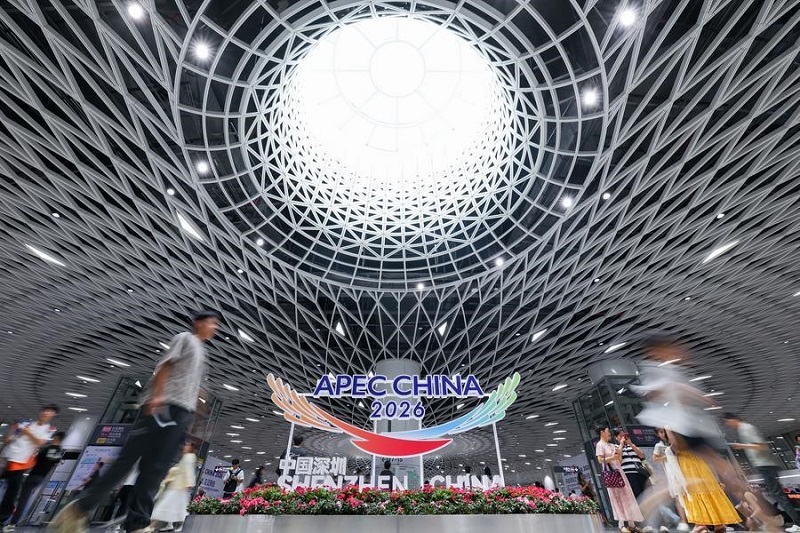
People walk past an APEC-themed installation at Gangxia North Metro Station in Shenzhen, south China's Guangdong Province, Oct. 25, 2026. (Xinhua/Mao Siqian)
Keen wrote to me: “One of the primary lessons of engineering is that we can build on what has been done by our predecessors – something economists are only partially in a position to do because its foundations are anti-empirical.” So, the question becomes, how can we make economics empirical? I used my book Understanding Object-Oriented Software Engineering for this. In its opening section I set out the requirements a model of a complex system must meet to be empirically grounded. An economy is a complex system, so these requirements apply to it, and they underpin the conclusions of The Chinese Experience.
In China, Confucianism has shaped ideas about social responsibility and the common good. The early Swedish social democrats took a similar approach – one shaped, in part, by Christian values. The two traditions are not identical, but both support empathy, honesty and obligations beyond individual self-interest. This shaped our thinking, perhaps best explained through a concept called “moral systems,” developed by Professor George Lakoff, a Berkeley cognitive scientist and linguist. In his book Moral Politics: How Liberals and Conservatives Think, he shows that we understand politics, economics and justice through “moral systems” that shape our thinking without our noticing. That is, we just believe something without consciously reflecting on it. This explains why a society whose moral system rests on empathy, honesty and obligations beyond self-interest will judge its economy in its own distinctive way.
But in the West, as these values weakened, self-interest and the supposedly self-regulating market took over. Economists schooled in classical thinking began to see the world through the claim, widely attributed to Adam Smith, that self-interest drives markets to reliably produce the best outcomes, and overlook the evidence of instability, inequality and social harm connected to unregulated self-interest. These ideas are now deeply entrenched in Western economics and hard to dislodge.
Professor Steve Keen describes it like this: “If change is going to come, it will be from the young, who have not yet been indoctrinated into a neoclassical way of thinking, and from those from other professions like physics, engineering and biology.”
This is where the idea of "trealth" comes in, offering a tool for understanding what real wealth is. We can use it to define a purpose for economics – achieving a richer and more secure society – and to test whether a society achieves it.
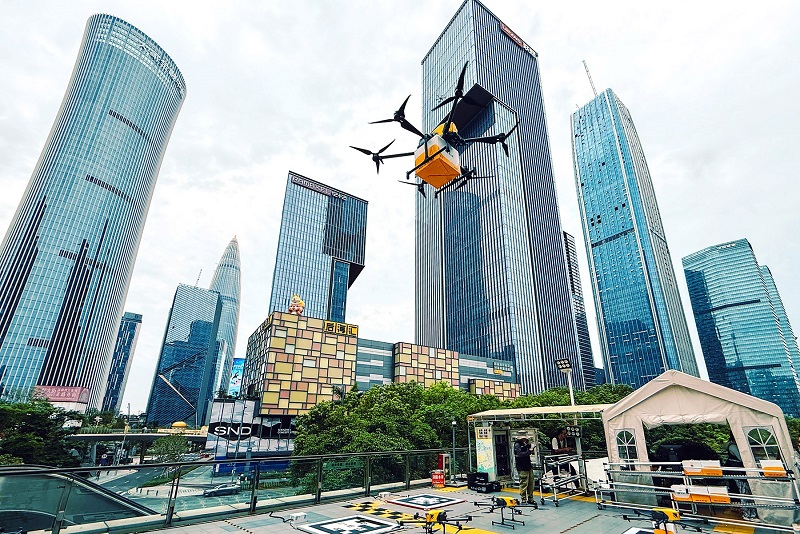
A drone operator of the food delivery giant Meituan pilots a food delivery drone in Shenzhen, Guangdong province, on May 4, 2026. (CHINA DAILY)
Just as the germ theory helped us understand the causes of disease, and the concept of an ecosystem helped us understand how living organisms interact, "trealth" helps us understand what prosperity actually is and how it can be created and sustained. For instance, it shows directly that creating money only creates purchasing power, not real wealth.
But can a new idea like "trealth" change the world? History shows it can. Scottish physicist James Clerk Maxwell’s unification of electricity and magnetism underlies much of modern technology, such as radio, radar, and Wi-Fi. Confucianism and Christianity shaped much of entire civilizations, and Adam Smith’s Wealth of Nations, published in 1776, still guides how Western economists think today.
"Trealth" is not complicated. It is simply a return to common sense – the kind that is easier to hold if we have not studied economics. We have lived with money for so long that we often treat it as valuable in itself. But money is only a mirror of real value. If the underlying value doubles, the reflection may double too, but only then. "Trealth" helps us see how clever economic theories can tamper with the mirror, so that it seems to show more value when nothing real has increased.
Some might argue that "trealth" has little relevance to China because the country already understands it in practice. Reading Xi Jinping: The Governance of China has convinced me that the current leadership understands the principles that lead to the creation of trealth. China creates true wealth, while the West increasingly equates wealth with money. But a clear term for this difference can benefit both, because the West once understood it too. For example, the architects of Sweden’s Folkhemmet (“the people’s home”) believed the economy should give ordinary people a secure and decent life. At 71, I remember the pride the older generation took in what it had achieved. But when those who had lived through that transformation were gone, its reasons were forgotten, and Sweden has drifted far from the thinking that built its welfare state. A concept like "trealth" could have helped prevent that, because it describes what is of real value and what is not.
Sweden is not an exception. Success easily breeds the assumption that it is permanent. Forgetting what creates true wealth carries such grave consequences that the value of a concept like “trealth,” which helps preserve that understanding across generations, should not be underestimated.
That is why I believe The Chinese Experience matters: not only for the West, which needs to rediscover what it has lost, but also for China and every society that wants to protect the foundations of its achievements.
___________
Stefan B. Sigfried is a Swedish writer and the author of several books. He holds a Master of Science in Engineering (Technical Physics and Mathematics) and a Master’s degree in Education. His career has spanned complex-systems modeling, software testing, quality assurance, programming, and analysis on emerging technologies.