On June 16, ahead of the 32nd Beijing International Book Fair, the Seminar on China’s Poverty Alleviation and International Communication – the launch event for the book Research on Chinese Poverty Alleviation Studies – was held in Beijing. Attendees included Fan Daqi, vice-president of the Academy of Contemporary China and World Studies; Jiang Ting, editor-in-chief of Zhejiang Education Publishing Group; Cao Li, author of Research on Chinese Poverty Alleviation Studies and deputy director of the Research Centre for Rural Revitalization at the Party School of the CPC Central Committee (National Academy of Governance); Wang Daoyong, deputy director of the Department of Social and Ecological Civilization at the Party School of the CPC Central Committee (National Academy of Governance); Gao Xingwei, director of the Teaching and Research Office for Economic System Reform under the Economics Teaching and Research Department of the Party School of the CPC Central Committee (National Academy of Governance); Huang Chengwei, member of the Expert Committee on Rural Revitalization under the Ministry of Agriculture and Rural Affairs and former director of the China Rural Revitalization Development Center; Zhang Qi, dean of China Institute for Poverty Reduction Research at Beijing Normal University; and Lv Wenbao, associate research fellow at the Centre for International Discourse Innovation of the Academy of Contemporary China and World Studies. The event was moderated by Wang Shengxiao, lecturer at the Economics Teaching and Research Department of the Party School of the CPC Central Committee (National Academy of Governance).
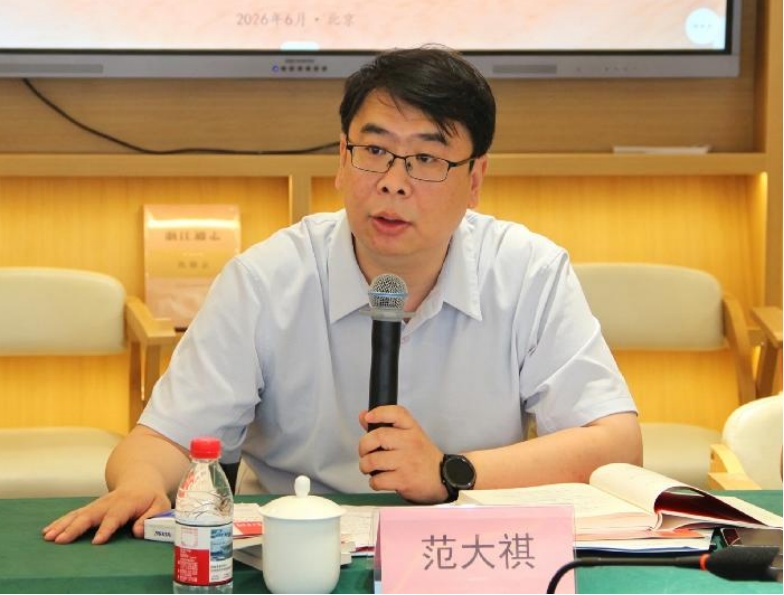
Fan Daqi, vice-president of the Academy of Contemporary China and World Studies.
Fan Daqi said China was at an important stage in strengthening its international communication capacity and building an independent knowledge system in philosophy and social sciences. He said poverty reduction was a landmark achievement in the course of Chinese modernization and an important point of reference for overseas audiences seeking to understand China’s development path and institutional strengths.
He said China’s poverty alleviation efforts were rooted in the people-oriented philosophy of traditional Chinese culture, combined the people-centered development philosophy of the new era with the pursuit of common prosperity, and reflected both civilizational depth and the aspirations of modernization. He added that Research on Chinese Poverty Alleviation Studies brought together theoretical depth, practical grounding and international communication value, offering an academic reference for understanding Chinese modernization and the drive towards common prosperity.
Fan said he hoped the publication would help deepen cooperation between think tanks and publishers, strengthen the academic basis for poverty alleviation research, and broaden channels for China’s exchanges with other countries on poverty reduction.
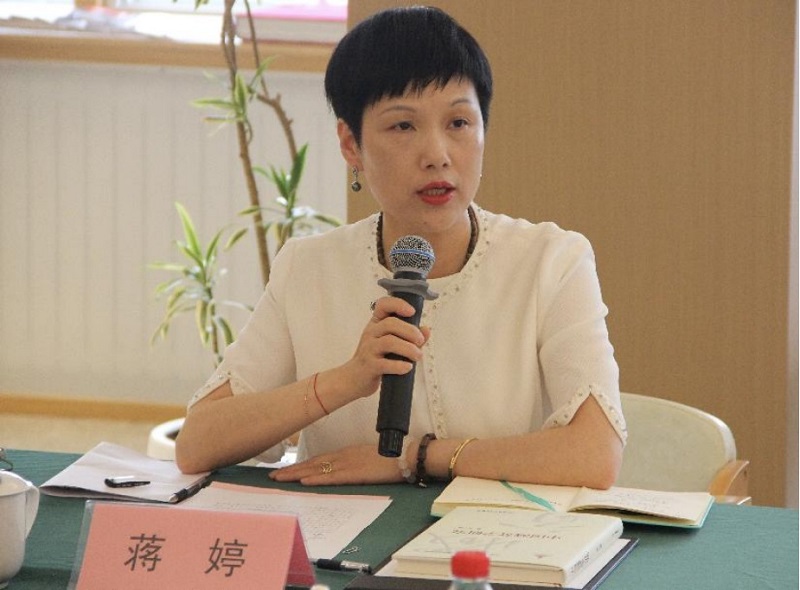
Jiang Ting, editor-in-chief of Zhejiang Education Publishing Group.
Jiang Ting said China’s anti-poverty campaign in the new era had produced what she described as a “miracle” in the history of global poverty reduction and had helped form a theoretical system of poverty alleviation with Chinese characteristics, style and ethos. She said the book, structured around General Secretary Xi Jinping’s important discourses on poverty alleviation, systematically reviewed the core ideas, theoretical foundations, practical approaches and global significance of Chinese poverty alleviation studies.
She said the book had a solid theoretical basis, a clear practical orientation and long-term value for international communication, and described it as an important contribution to building China’s independent knowledge system in philosophy and social sciences. Jiang added that Zhejiang Education Publishing Group would continue to pursue both quality publishing and international communication, including overseas publication, multilingual adaptation and translation, and broader cross-platform dissemination.
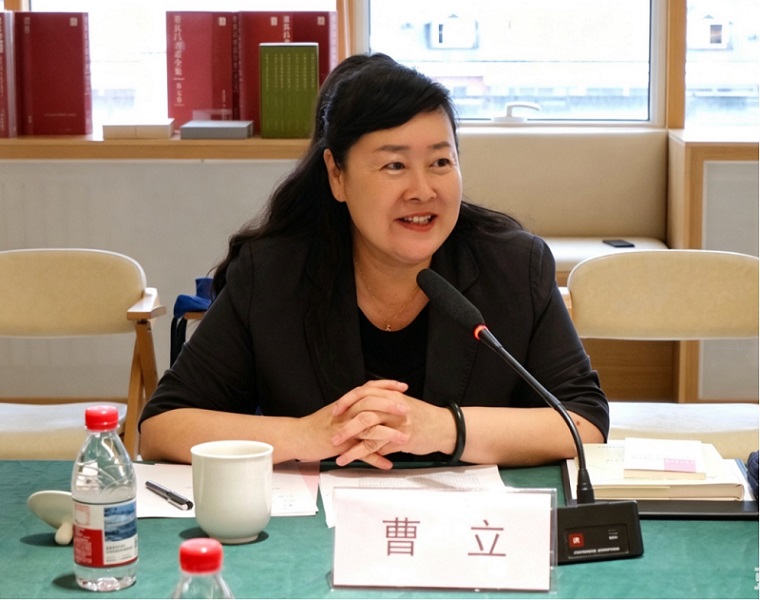
Cao Li, author of Research on Chinese Poverty Alleviation Studies and deputy director of the Research Centre for Rural Revitalization at the Party School of the CPC Central Committee (National Academy of Governance).
Cao Li, the book’s author, outlined the research project and the thinking behind its writing. She said Chinese poverty alleviation studies were grounded in General Secretary Xi Jinping’s important discourses on poverty alleviation and based academically on the practice that led to what was described as a complete victory in the fight against poverty. She said the work sought to highlight the scientific, practical and global significance of China’s poverty alleviation path.
Cao said systematic research in this field should explain, at an academic level, the strengths of the CPC’s leadership and of the socialist system with Chinese characteristics, while clarifying the institutional and theoretical logic behind practice. She said it should also remain rooted in China while maintaining a global perspective, develop concepts and expressions that could bridge Chinese and international discourse, and provide a model and theoretical reference for developing countries addressing poverty and pursuing self-directed development.
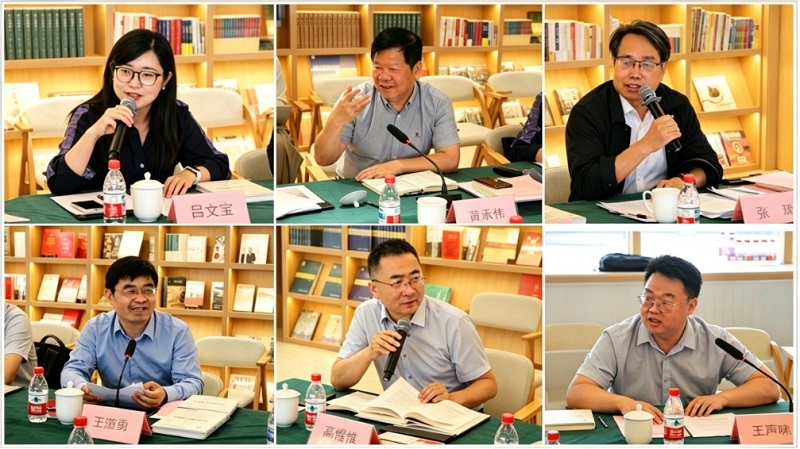
Experts in thematic discussions and exchanges.
Huang Chengwei said Chinese poverty alleviation studies should move beyond the framework of traditional Western poverty theory and, drawing on China’s national conditions, establish an independent disciplinary system that explains the causes of China’s poverty alleviation achievements through institutional operation, implementation mechanisms and development orientation. In terms of international communication, he said it was important to follow the broader framework of the Party’s innovative theory for the new era, strengthen empirical comparative research, refine distinctive concepts, and further explore local experiences such as Zhejiang’s Green Rural Revival Programme.
He said the key to explaining China’s poverty alleviation story internationally was to set out clearly the institutional logic, governance mechanisms and development philosophy behind local practice, so that China’s experience could have sustained influence through forms of knowledge that were intelligible, comparable and transferable.
Zhang Qi said poverty alleviation was a field in which China had accumulated substantial practice and distinctive experience, and one that was central to the development of an independent knowledge system. He said that telling China’s poverty reduction story well required a clear account of the practical logic, theoretical logic and global significance of its approach, as well as deeper international communication, broader country-specific exchanges, and progress in turning China’s experience into knowledge that overseas audiences could understand, draw on and apply.
He added that communication with Belt and Road partner countries should be regionalized, audience-specific and targeted, and that the accessibility and practical relevance of Chinese poverty alleviation studies should be improved in country-specific exchanges.
Wang Daoyong said that telling the story of China’s fight against poverty effectively required making full use of the bridging role of philosophy and the social sciences in connecting Chinese and foreign cultures and promoting exchanges between civilizations. He said this would help get across China’s voice, theory and thought, improve global understanding of the country, and make a positive contribution to building what China terms “a community with a shared future for humanity”. He added that China’s anti-poverty theory with Chinese characteristics could have particular relevance and influence in developing countries.
Gao Xingwei said foreign audiences paid close attention to China’s poverty alleviation practices and that many countries were learning from its experience in poverty governance. He said that, building on existing foundations for overseas publishing cooperation, international communication on Chinese poverty alleviation studies was more likely to gain recognition internationally, especially in developing countries.
Lv Wenbao said the international community was paying close attention to China’s poverty alleviation achievements, but that one-sided and prejudiced narratives continued to affect the wider discourse. She said there was therefore a need to deepen academic research further and to innovate in communication methods in order to build broader international consensus and make China’s poverty alleviation philosophy more accessible.
She said the international communication of China’s poverty alleviation practice should combine “what we want to say” with “what overseas audiences want to hear,” “laying out the facts” with “explaining the logic,” and “telling our own stories” with “having others tell them.” She added that data visualization, concrete scenarios and plain language could help present China’s poverty alleviation experience as a body of public knowledge with wider international benefit.