It is November in northern Jordan. Sunlight filters through the curled, dry leaves of olive trees, casting dappled shadows on cracked earth. Ancient trunks bear centuries of rough texture, yet only sparse, shrunken olives hang from the branches, silent evidence of a drought more severe than any in recent memory. Villages across the region are paralyzed by water shortages. Harvests are expected to drop sharply, and for families who depend on these trees, another difficult year lies ahead.
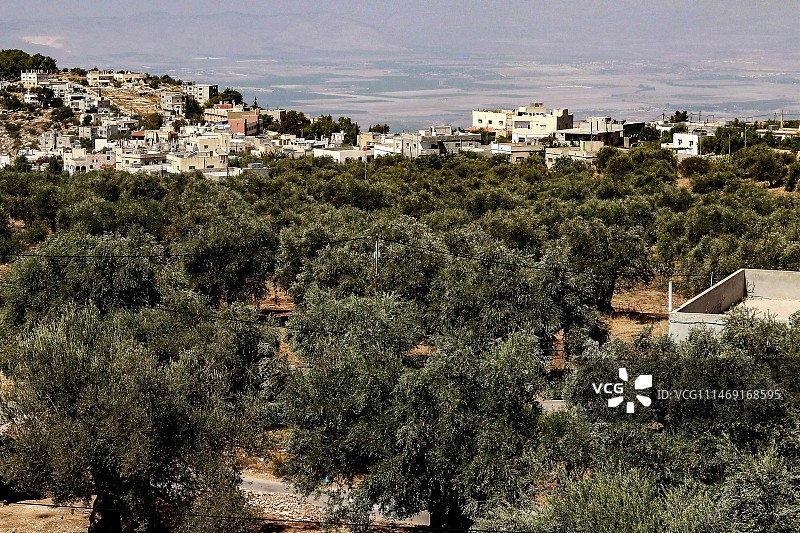
Some of the oldest olive trees at a local farm, in Ajloun, Jordan, on September 25, 2023. According to the International Olive Council, Jordan is the world’s 10th largest olive producer, home to many ancient trees that have become an integral part of the country’s identity and culture.
There is a gentle, melancholic song called Olive Tree that I first heard during my studies in China. Whenever I hear it again, I think of the olive trees of my homeland and the line “for the olive trees in my dreams.” In those moments, the olive groves of Jordan and the classrooms of Peking University’s Yanyuan campus seem to come together. I see myself studying late into the night, arguing with classmates and receiving quiet encouragement from teachers. The memories are vivid and ever-present.
After graduating from the Department of Agronomy at Jerash University in 1999, I joined the National Agricultural Research Center (NARC) of Jordan. Despite its serious disadvantages in agriculture, water scarcity, limited arable land, frequent droughts and fragmented smallholder farming, Jordan has long prioritized the sector and steadily increased investment. In the year I joined, King Abdullah II ascended to the throne, setting food security as a national priority and introducing a series of supportive measures.
In June 2024, the Farmer Medal Ceremony of the Food and Agriculture Organization (FAO) was held at the Royal Palace in Amman. FAO Director-General Qu Dongyu said in his address: “This medal recognizes Your Majesty’s remarkable wisdom and foresight during 26 years of leadership. Under Your Majesty’s guidance, Jordan has promoted the transformation of agri-food systems, building a more efficient, inclusive, resilient and sustainable agricultural sector, setting an example for regional development.”
Jordan has long worked with international organizations and partner countries to bring in capital, technology and expertise to its agricultural sector. Since the 1970s, we have pushed to replace traditional flood irrigation with water-saving alternatives and built sustained cooperation projects with China, Germany, Türkiye, FAO and the United Nations Development Program. Through these efforts, our crops have become resilient in conditions of water scarcity. We have also turned Jordanian olive oil into a product with a global reputation, backed by the distinctive qualities of our drought-resistant local varieties.
Yet doubt persisted. National strategies, research reports and plans my colleagues and I developed could not resolve the deep-rooted grassroots challenges: high-cost and hard-to-maintain equipment, fragmented farmland, weak bargaining power of farmers, expensive agricultural inputs and limited market access.
After one policy seminar, I sat in an olive grove, lost in thought. Abdullah, a 60-year-old farmer, approached with a basket. Sighing, he pointed to the parched land and worn irrigation pipes. “Water is getting scarcer; the trees are growing older. We cannot live without water, but upgrading equipment is too expensive. What can we do?”
For years, I searched for solutions. Then I came across accounts of how China’s agricultural innovations had made a real difference in water-scarce regions. A country facing similar constraints had found practical ways to pull farmers out of poverty. I thought China might provide the answers I was looking for.
In the autumn of 2018, I arrived in Beijing as a PhD student at the Institute of South-South Cooperation and Development (ISSCAD) at Peking University, determined to find practical solutions for development.
Learning in Yanyuan
Thanks to years of academic experience and English proficiency, I had no difficulty with English-taught courses. ISSCAD’s curriculum differs from that of traditional universities. For students like me who come with practical problems, the institute combines lectures from distinguished scholars in economics and development studies with a strong emphasis on critical thinking, practical application, cross-disciplinary exchange and the ability to adapt what one learns to new contexts.
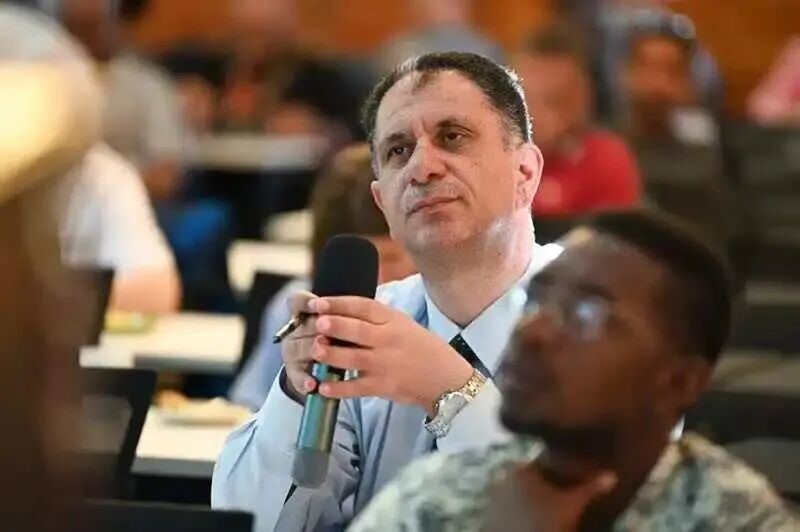
The author Raed Ali Mohamad Abdalqader actively participating in a session at Peking University.
In class, professors facilitate in-depth discussions on real-world conditions in our home countries. After class, classmates from various countries form study groups to share experiences. I remember introducing Jordan’s situation: one of the world’s most water-scarce countries, with only about 70 cubic meters of renewable water per capita per year. Even China, itself a country with relatively limited water resources, has about 30 times Jordan’s per capita availability. My classmates were stunned to learn that one person’s annual water use in Jordan is less than what a typical Chinese household uses in a single month.
Our 2018 cohort included Chinese doctoral students for the first time, two of whom were from national forestry and foreign aid agencies, both proficient in Arabic. Learning about my challenges, my Chinese classmates shared China’s experiences in water-saving agriculture and afforestation in arid areas, translated agricultural cooperation materials into Arabic and introduced models of China’s agricultural cooperation with other Middle Eastern countries. These actions embodied a spirit of empathy, inclusiveness, dialogue and sharing, the true “Chinese spirit,” encouraging us to view the world as a community of shared interests.
Professor Xi Tianyang gave me advice that changed the direction of my dissertation. He said that rather than using China as my comparative case, I should shift to Egypt, a country that was far more comparable. Feasibility and relevance had to come first. Working through a systematic comparison of economic and diplomatic practices between Jordan and Egypt, I began to see why their development paths had diverged. The study came to the conclusion that sound economic governance cannot rely on diplomacy alone. It must generate lasting value through trade agreements, investment and practical cooperation on the ground.
In my spare time, I enjoyed observing the small, delightful cultural exchanges between China and the Arab world. During the Dragon Boat Festival, my Chinese classmates introduced zongzi, sticky rice wrapped in bamboo leaves. It reminded me of dawaly, our traditional festive food: rice and meat wrapped in grape leaves and dressed with lemon juice and olive oil. The first time I ate zongzi, I bit directly into the bamboo leaf, as I would with grape leaves, and discovered an unexpectedly bitter taste. These gentle cultural differences broadened my vision and deepened my understanding in ways no textbook could.
Putting Knowledge into Practice
A Chinese saying goes: zhixing heyi, which means knowledge and action are inseparable. Through rich field studies, we observed China’s development practices up close. One agricultural field trip impressed me most.
In Baomin Village in Yiyang, Hunan Province, I found that local farmers had once faced conditions remarkably similar to those of Jordanian olive growers: fragmented farming, high input costs and low incomes. The introduction of modern agricultural cooperatives had transformed their situation entirely. The cooperative’s rotation system, shared services and contract farming were models Jordan could adapt. Shared agricultural machinery solved the problem of smallholders being unable to afford modern equipment, and 24-hour shared drying facilities greatly improved efficiency.
The smart drip irrigation system running through the greenhouses was something I kept returning to. Compared with traditional Jordanian irrigation, it reduced costs andimproved efficiency by roughly 30 percent, precise delivery of water, reduced labor and the ability to manage an entire operation remotely. It performed well under arid conditions while maintaining crop quality. For olive cultivation in Jordan, it was almost a perfect fit.
Realizing that Jordan’s olive oil, though world-class, struggled to increase income due to fragmented farming and high irrigation costs, I decided to promote China’s smart drip irrigation and cooperative models to Jordanian farmers and help them build something stronger together.
After returning to NARC, I immediately started agricultural cooperation initiatives with China. My first priority was to promote the smart drip irrigation technology I had seen in Hunan. To that end, I proactively began engaging and establishing contact with relevant Chinese companies. At the same time, I also started introducing related Chinese technological products to local farmers.
Skepticism among Jordanian olive farmers was widespread at the start. Many doubted whether the technology was worth the cost, whether it would hold up in practice and whether it would actually pay off. I did not try to argue with them. I came with data and demonstration videos, put in long days in the olive groves, identified sites for pilot programs, secured 50 percent government subsidies on equipment and arranged for Chinese technicians to work alongside farmers on the ground. After several visits, a 63-year-old farmer named Hussein Hosni, drawn by curiosity about the phone-controlled system, agreed to give it a try.
Soon after, he came to me with a wide smile. “Look, this Chinese smart drip irrigation is truly different! It saves 40 percent more water than traditional irrigation, the trees grow much better, and I can control the watering from my phone without going to the orchard every day. It’s so convenient!” He showed the real-time data and control interface to the farmers around him. Word spread quickly, and more farmers began inquiring about the system.
Later, we introduced another Chinese innovation: biogas production from agricultural waste. China had held biogas training sessions in Jordan and built a demonstration station in the northern olive-growing areas. Farmers gathered to watch olive pulp and crop straw converted into clean energy. Each ton of olive pulp produces about 200 cubic meters of biogas, enough to supply five families for a month, lowering costs and reducing emissions.
Drawing on the cooperative model from Baomin Village, I helped olive growers establish an olive cultivation and processing cooperative. Bulk fertilizer purchasing reduced prices by 15 percent. With NARC research funding, three advanced olive oil presses were purchased, offering farmers low-cost processing that saved nearly 30 percent compared with small workshops. Most importantly, by leveraging the high quality of Jordanian olive oil, we signed long-term contracts with German organic food distributors at guaranteed minimum prices, following international standards for cultivation and processing.
After Abdullah’s son joined the cooperative, he adopted the smart drip irrigation system and began enjoying the benefits of shared services. His income increased by nearly 30 percent in the first year. He brought me a bottle of freshly pressed olive oil. “This is oil from olives grown with Chinese smart drip irrigation. You must taste it.” Looking at the clear, bright oil in the bottle, I felt a deep satisfaction, the kind that comes from seeing knowledge put to use for people who need it.
The Trees Still Stand
The drought of 2025 exceeded even the most pessimistic forecasts. National olive production was expected to fall by 30 to 40 percent, with some areas reaching only 10 percent of the previous year’s harvest. Even trees fitted with smart drip irrigation were showing the strain. Seeing the farmers’ faces and the condition of the groves, I found it difficult to remain optimistic.
Just as I felt low, Hosni, now over 70, approached me, placing his weathered hand on my arm and gesturing toward the old olive grove behind him. Despite its yellowish appearance, it still stood firm and resilient.
He said, “Son, do not be sad. Drought brings suffering, but it also makes our oil unique. These trees were left by our ancestors. From traditional irrigation to Chinese smart drip irrigation, we have always found ways to survive. As long as there is a single drop of water, we will not give up.”
His words warmed my heart. Looking at the olive trees rooted in cracked soil, I suddenly realized that what I learned from China is not only smart drip irrigation and cooperative models, but also the wisdom of tailoring solutions to local conditions and the value of long-term commitment. South-South cooperation is not only about experience sharing, but also technological upgrading, mutual learning across cultures and the transmission of courage and hope.
Today, I remain in close touch with my Chinese teachers and classmates. When facing difficulties, I consult Professor Xi. When designing farmer training programs, I video call Director Li from Hunan to learn about the latest cooperative management and drip irrigation upgrades. I show my children photos of the Great Wall, tell them about Chinese greenhouses and cooperatives and teach them to sing Olive Tree.
A breeze passes. Olive leaves rustle as if singing along. The Jordanian olive trees continue to fight the drought. I rise and step into the sunlight, ready to reconnect with Chinese agricultural experts and to face the next challenge together, with my olive trees and my people.
—————
Raed Ali Mohamad Abdalqader, an agricultural expert from the National Agricultural Research Center of Jordan, is a Ph.D. graduate from the Institute of South-South Cooperation and Development at Peking University.