At present, the international order is being transformed at an unprecedented rate, and the global governance system is facing profound adjustments. Deficits in security, development, and technology are increasingly intertwined, presenting the international community with a critical choice of direction. It is therefore extremely important for every country to revitalize true multilateralism and reform the global governance system.
The 20th National Congress of the Communist Party of China (CPC), convened in 2022, emphasized China’s active participation in the reform and development of the global governance system, charting a course for China to contribute to the improvement of global governance. In 2025, the Fourth Plenary Session of the 20th CPC Central Committee laid out important plans for advancing national endeavors at a new historical juncture, providing guidance for better integrating China’s development with the common development of the entire world.
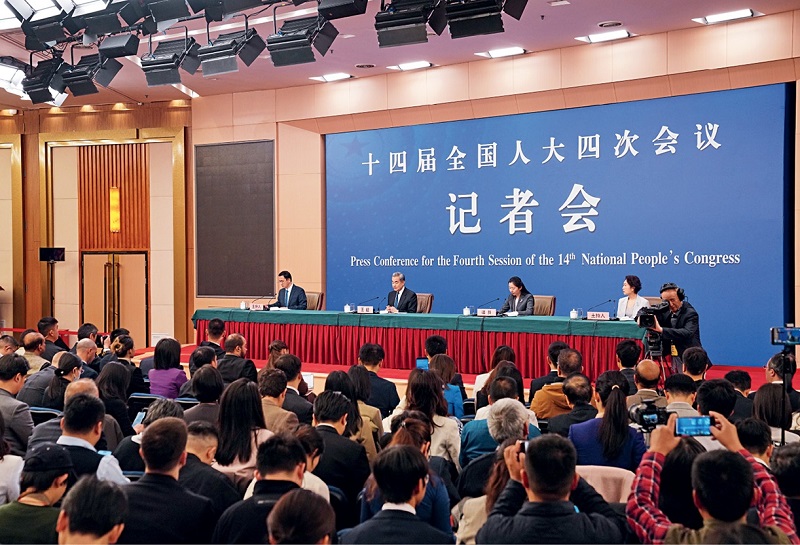
On March 5, 2026, the Fourth Session of the 14th National People’s Congress convened in Beijing. Premier Li Qiang delivered the government work report, in which he further elaborated on China’s policy orientation toward promoting high-quality development and expanding high-standard opening-up, thereby offering the turbulent world a stabilizing force of predictability.
During this period of reshaping the international order, China will focus on economic cooperation with the Global South as a driving force, promote development as the center of global governance, and consistently contribute constructive strength to improving global governance by standing as a beacon for peace and stability as well as a provider of public goods for development.
International Order Facing Challenges
Undeniably, the post-World War II international order is presently facing severe challenges. From an economic perspective, this turbulence is not accidental but stems from the collapse of logic underpinning the governance system.
First, multilateral mechanisms have come under pressure. The authority of rules is undermined, the provision of public goods is insufficient, and cooperative mechanisms are not functioning smoothly. Talks have emerged that UN peacekeeping operations may be forced to downsize due to funding gaps, indicating that for multilateral mechanisms to be effective, sustainable resource support is indispensable. This also reflects structural shortcomings in the provision of international security public goods.
Second, rules are being instrumentalized. The prolonged imbalances within the internal governance and development models of some countries have given rise to populism and protectionism, leading some countries to use economic and trade rules as tools of competition.
Research by the U.S. Congressional Budget Office shows that the share of middle-income households in the U.S. fell by six percentage points between 1979 and 2022. Data from the U.S. Census Bureau indicates that the country’s Gini coefficient rose to 0.494 in 2021. Internal divisions, coupled with geopolitical competition, have led to the rise of “decoupling” and tariff barriers, increasing cooperation costs and impacting the stability of industrial and supply chains. Related research by economists at the Federal Reserve Bank of New York also suggests that a significant portion of tariff costs is borne by the businesses and consumers of importing countries. Hiking tariffs in the name of security often proves to be a losing game.
Third, the technological divide is deepening. The International Monetary Fund (IMF) points out that artificial intelligence could affect about 40 percent of jobs globally, with the share as high as 60 percent for advanced economies. It is evident that if the distribution of benefits remains unbalanced, the supply of rules is insufficient, and technological barriers spill over into other areas, pressures on the Global South regarding employment, industrial upgrading, and digital governance will be further amplified. The development gap may shift from traditional areas to new technological domains.
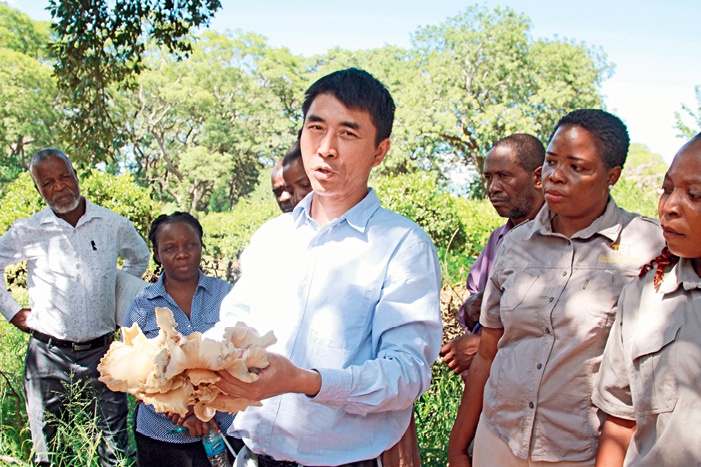
A Chinese expert instructs local trainees at a technical training course held by the China-aided juncao (grass to produce mushrooms) technology project team in Mashonaland West, Zimbabwe, on April 14, 2025.
Seeking Opportunities in Challenges
Yet behind challenges still lie opportunities. The collective rise of the Global South has provided a foundation for prioritizing development, and the international community increasingly expects the establishment of a more inclusive global governance system.
President Xi Jinping has emphasized on multiple occasions the need to put development front and center on the international agenda, which has become a broad consensus. Reforming and improving the global governance system based on the purposes and principles of the UN Charter is also becoming a shared aspiration of a growing number of countries.
A recent report released by a think tank of Xinhua News Agency early this year proposes that the global governance system should keep up with the times, particularly in reflecting the reality of the rising Global South. It emphasizes that China’s Global Governance Initiative (GGI) sets the direction for improving global governance.
China’s Choice and Role
The decisive actions China has taken during the transformation of global governance demonstrate its unique role and the contributions it can make to achieve this end.
Providing security public goods to address the fragility of multilateral mechanisms. China firmly supports the central role of the United Nations and promotes conflict resolution through dialogue. In 2023, Saudi Arabia and Iran resumed diplomatic relations in Beijing after a seven-year period of diplomatic estrangement, setting an exemplary case of dialogue triumphing in foreign diplomacy. On the Ukraine issue, China has consistently maintained an objective and impartial stance, actively promoting ceasefire and cessation of hostilities.
Staying at the forefront of peacekeeping operations throughout the globe. As of February 2025, China had cumulatively dispatched over 50,000 peacekeepers, the largest troop contributor among the permanent members of the UN Security Council. In February 2026, China reiterated the need to enhance the safety of peacekeepers and continued to provide financial support through the China-UN Peace and Development Fund. Against the backdrop of credit contraction and withdrawal of investment in multilateral security governance, China has continued to contribute a high level of resources, injecting stability into the global governance system.
Correcting institutional failures in industrial chains. To address global development imbalances, China has offered a growth solution aimed at reducing total factor costs through the Belt and Road Initiative (BRI) and the Global Development Initiative (GDI). This not merely boosts the physical flow of capital but corrects market failures in global industrial chains. The Global South regards development as its core task, and China’s advocacy and practice align closely with this. Through large-scale infrastructure connectivity, China is helping other Global South countries integrate into global value chains, breaking long-standing physical isolation and trade barriers, which significantly reduces transaction costs. The BRI has attracted the participation of over 150 countries and more than 30 international organizations. As a result, this has generated over 3,000 cooperation projects, mobilizing nearly US $1 trillion in investment, and has created tens of thousands of jobs in partner countries.
Furthermore, the GDI has also promoted industrial upgrading in Global South countries. As of September 2025, the Global Development Project Pool had included over 1,800 projects, mobilizing approximately US $14 billion in special funds. These collaborations have helped bring development issues back to the center stage of global governance, meeting the demands of the Global South.
Empowering technological sovereignty to bridge the digital divide. The Global South requires not only project support but also enhanced capacity for independent development. In January 2026, China successfully launched a remote sensing satellite for Algeria, helping it carry out national land planning and disaster prevention. In February, a satellite ground data receiving station built with Chinese assistance was handed over to Namibia and achieved autonomous operations after technical training of some local residents. When technological barriers restrict other Global South countries’ participation in the digital revolution, China is helping them transition from technological dependence to technological independence and from bystanders in global governance to participants with digital sovereignty.
The policy signals released during the 2026 “two sessions” reflect China’s effort to translate its own development momentum into a stabilizing force for global governance through institutional opening-up. Through the GGI and BRI cooperation, China consistently upholds core principles such as multilateralism, international rule of law, and the well-being of the people, promoting equal participation of Global South countries and enhancing the representativeness and inclusiveness of global governance. On the journey toward a community with a shared future for humanity, China will continue to contribute to global peace and common prosperity. 
LIU QIAN is vice dean of the Belt and Road School and associate professor at the Business School of Beijing Normal University.