|
In 2005, the performance of the Berlin Philharmonic Orchestra organized by Lin Hongming was so warmly welcomed by Chinese audiences that the ticket prices had skyrocketed to over RMB 4,000. In 2008, the Berlin Philharmonic Orchestra and the Oriental Art Center negotiated a performance in China for 2011. But this time Lin Hongming drove a hard bargain: "We can offer only half of the performing fee of three years ago. If they agree to charge less, we will talk about further cooperation." Lin hopes the orchestra will lower its price under the current circumstances. This is not only aimed at keeping the costs down, but also at lowering the ticket prices and, making the performances more accessible to the average person.
The negotiations between the Shanghai Grand Theater and the Chicago Symphony Orchestra achieved a breakthrough – the organizer cut the player's charges down by 50 percent of that in 2007. "The reduction in artist fees allow us to offer more low-priced tickets," says Qian Shijin, art director of the Shanghai Grand Theater. According to Qian, in the past high ticket prices were driven up by a disordered domestic competition that left foreign orchestras feeling that China's huge market would be willing to pay whatever they asked for." Lin Hongming considers the financial crisis an opportunity since "it can drive out incompetent smaller firms, leaving the bigger companies to hold negotiations in a more steady and orderly market environment."
 |
|
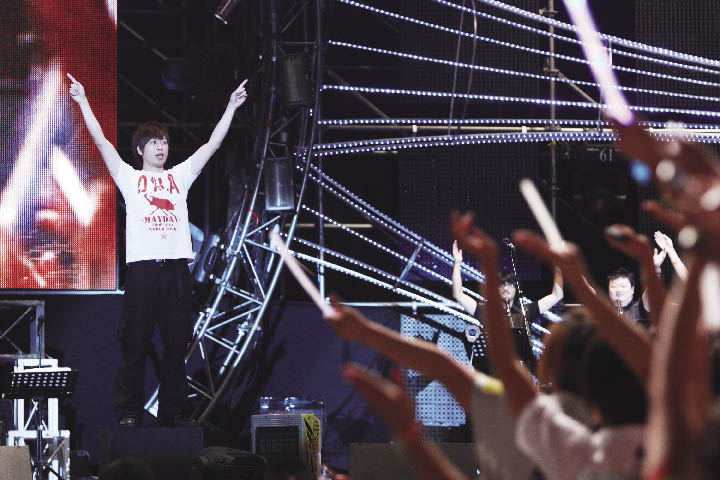
About two concerts were held in Beijing every week during July and August this year. China Foto Press |
Cultivating the Market
It was a common understanding among performance agencies that Shenzhen people had no fancy for dramas. A few years ago, the well-received Beijing People's Art Theater performed its forte Teahouse in Shenzhen, but it closed on a down note – less than a third of the seats were filled for the performances in a 1,500-person-capacity theater.
These days people in Shenzhen have come around and learned to enjoy drama. The Royal Tramp that played this past May earned over RMB 100,000 in box office receipts within its first three days. Tickets at the lower prices of RMB 80 and 180 were almost all sold out. "The market needs to become acclimated just like when cultivating a new hobby," says Wang Ying.
Many people share the same opinion with Wang Ying. "What we hope to do is to help more young people understand and enjoy the charms of opera. Because a cause without young people's participation is hopeless," Deng Yijiang emphasized.
Since the end of last year, the National Theater for the Performing Arts has launched an "opera lecture program" to cultivate potential audiences. By marketing at banks, airline companies, universities, cultural centers and residential communities, they draw attention to the beauty of opera and develop public appreciation for it. Over 300,000 people have participated in this program and numerous netziens continue to follow it closely via the Internet. "This activity promotes opera systematically, teaching audiences to understand this art, helping them to see opera parallels in everyday life," said Hao Weiya, assistant professor from the Central Conservatory of Music, and one of the program's lecturers.
During the opera festival that lasted from April to July of this year, the National Theater for the Performing Arts held a "classical art lecture" and an "opera-lovers salon," which invited experts and artists to analyze various aspects of classic works and share their fascinating perceptions of each performance. Moreover, everyday there were six to nine hours worth of performances of classical opera fragments in the theater's public performance space, which attracted over 200,000 people and introduced them to general opera facts, plots and roles.
The Nessun Dorma – an opera themed exhibition in the theater – also helped to attract large numbers of visitors. The displayed manuscripts, costumes and props, and even a video of opera master Giacomo Puccini's one and only filmed performance help provide other direct ways for the public to understand the art and promote their enjoyment for generations to come. |