As a natural climatic divide between northern and southern China, the Qinling Mountains nurture a secret ecological haven that a diversity of unique species call home. Let’s go on a journey to discover these rare flora and fauna who live deep within these green mountain forests.
Forest Musk Deer: Reclusive Residents of Remote Mountain Forests
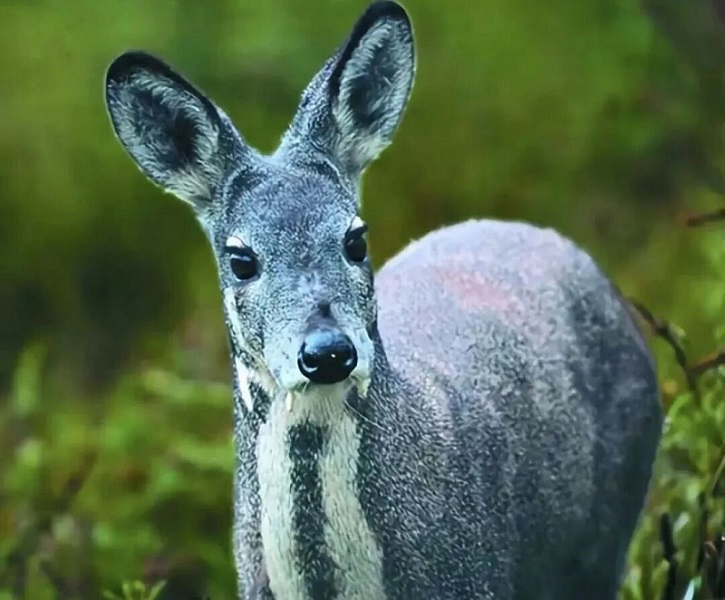
Photo courtesy of Huashang Daily
The forest musk deer is a wild animal under first-class national protection. It is a perennial inhabitant living in the mixed coniferous and broad-leaved forests over 1,000 meters above sea level in the Qinling Mountains. Its coat is dark olive-brown, with a distinct broad white or pale-yellow stripe on each side of its neck, extending from behind the ears down to the armpits. Male forest musk deer have well-developed upper canines that protrude outwards like fangs.
Listed as Endangered on the IUCN Red List of Threatened Species and Critically Endangered on China’s Red List of Biodiversity, the forest musk deer has benefited from strengthened ecological conservation in the Qinling Mountains. Its population is steadily recovering, and individuals are frequently captured on infrared camera footage deep in the Qinling wilderness.
Chinese Serow: The “Recluse of Mountain Forests”
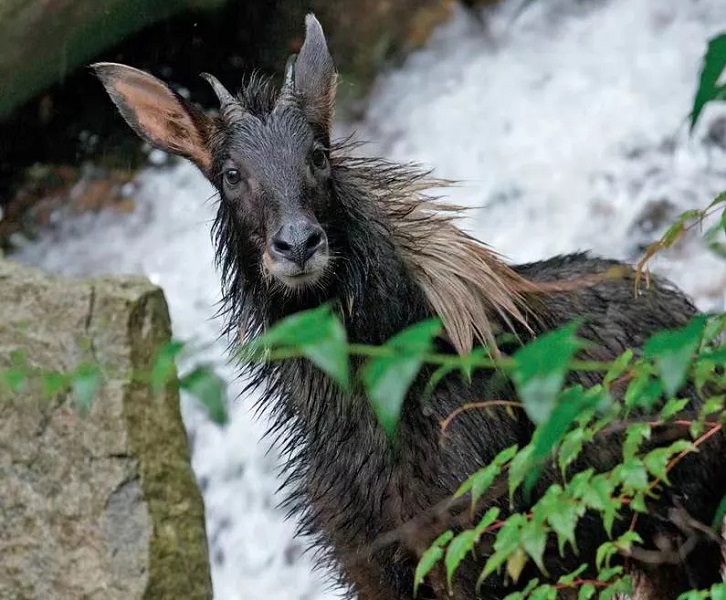
The Chinese serow is a wild animal under second-class national protection. Boasting a distinctive appearance, it typically inhabits high-altitude mountainous areas of the Qinling Mountains. Agile and nimble, it excels at moving and jumping among steep rock faces, cliffs and jagged boulders. Mostly a solitary creature, Chinese serows feed at dawn and dusk. With stringent requirements for habitats, they serve as an important indicator species reflecting the ecological integrity of the Qinling mountain ecosystem. Thanks to continuous efforts in ecological conservation across the Qinling range, Chinese serows are frequently captured by infrared cameras. Their frequent appearances stand as vivid testimony to the achievements of ecological protection.
Golden Eagle: Soaring Overlord of the Skies
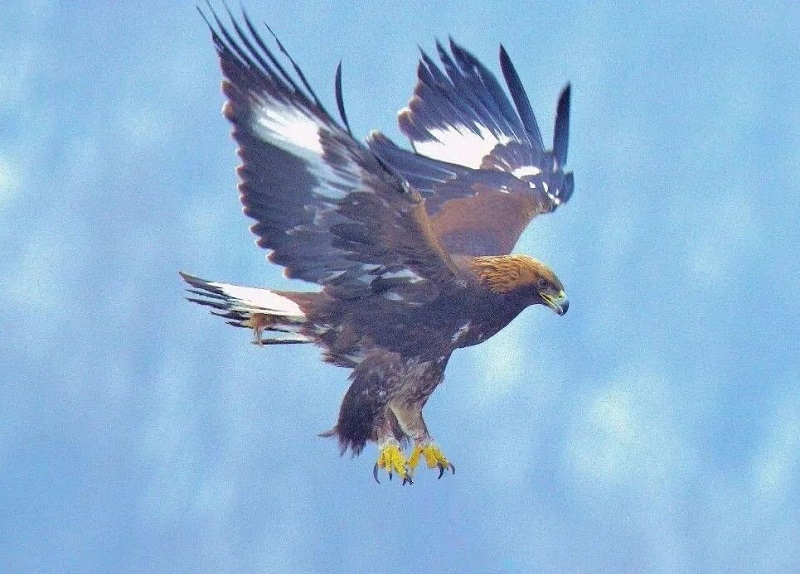
Photo courtesy of Shaanxi TV News
The golden eagle, a wild animal under second-class national protection, is an apex raptor ruling the skies over the Qinling Mountains. Adult golden eagles possess an imposing presence with a wingspan of over two meters. Their broad, powerful wings allow them to ride mountain updrafts, soar skyward and keep a watchful eye on mountain ranges. Endowed with exceptional eyesight, they can accurately spot prey on the ground from high altitudes and with their extremely fast diving speed, which make them formidable hunters.
Golden eagles have been sighted on numerous occasions. As a raptor at the top of the ecological food chain, their stable populations testify to a fully layered Qinling ecosystem, abundant wildlife resources and a thriving ecological landscape.
Qinling Lenok: A Living Fossil Surviving through the Ages
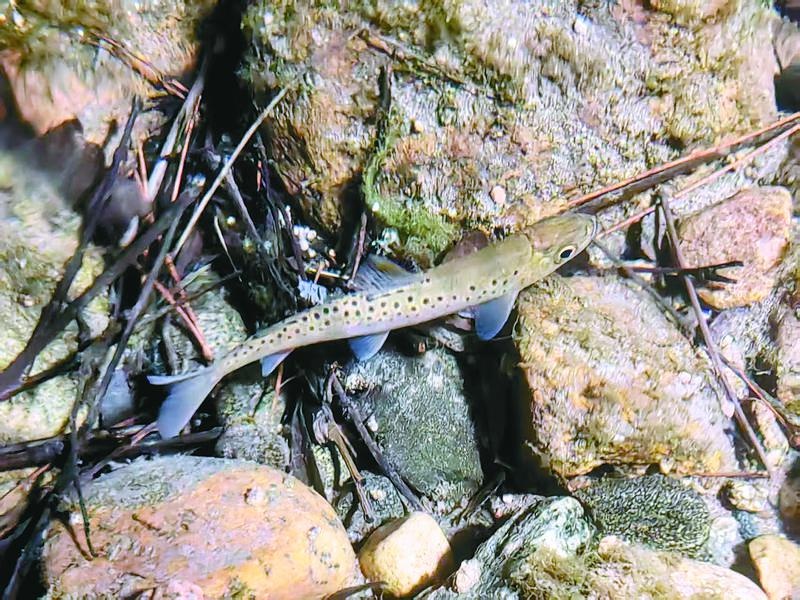
Photo courtesy of Xi’an Daily
As the rare fish species named exclusively after the Qinling Mountains, wild populations of the Qinling lenok are protected as wild animal under second-class national protection. It has a spindle-shaped body covered with tiny round scales. Its flanks are dotted with plum-blossom-like spots, hence its alternative name “plum blossom fish”.
Extremely demanding of living conditions, the species inhabits only mountain streams at an altitude of 900 to 2,300 meters in the Qinling Mountains and requires exceptionally high water quality. Thanks to fish stock enhancement, release programs and the establishment of nature reserves, the survival prospects of the Qinling lenok keep improving. Sizeable populations have been found in the upper reaches of the Hei River.
Dove Tree: Messenger across Time
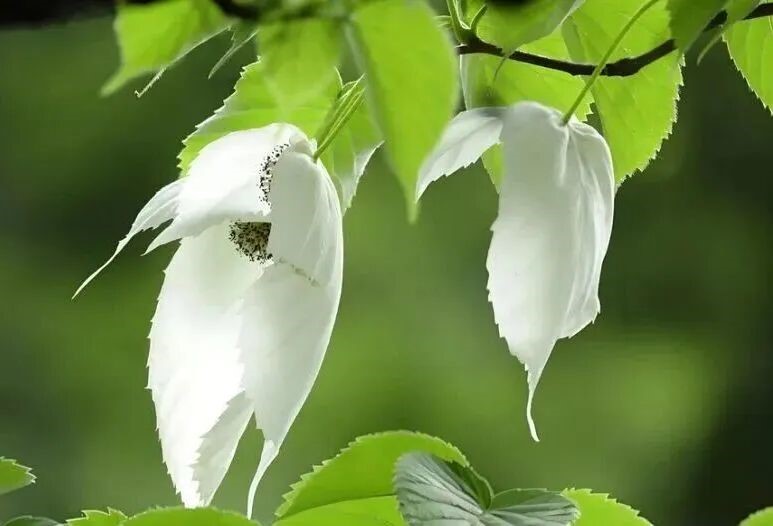
Photo courtesy of Qinling National Botanical Garden
The dove tree (Davidia involucrata) is a wild plant endemic to China under first-class national protection. Originating 60 million years ago, it survived from the Ice Age to the present day and is known as a “living fossil of plants”. A deciduous arbor, it features dark grey or dark brown bark, producing flowers with milky white bracts resembling white doves, hence the name “Chinese Dove Tree”.
Dove trees often grow alongside other broad-leaved trees at altitudes between 1,250 and 2,200 meters. They grow slowly and enjoy an extremely long lifespan. As a rare ornamental tree species, it also holds ecological clues to the evolution of ancient plants, serving as evidence of the long-standing biodiversity of the Qinling Mountains. Since 2017, the Qinling National Botanical Garden has carried out ex situ conservation research on dove trees. Thanks to persistent efforts, dove trees have finally bloomed successfully on the northern foot of the Qinling Mountains.
Chinese Yew: An Evergreen National Treasure
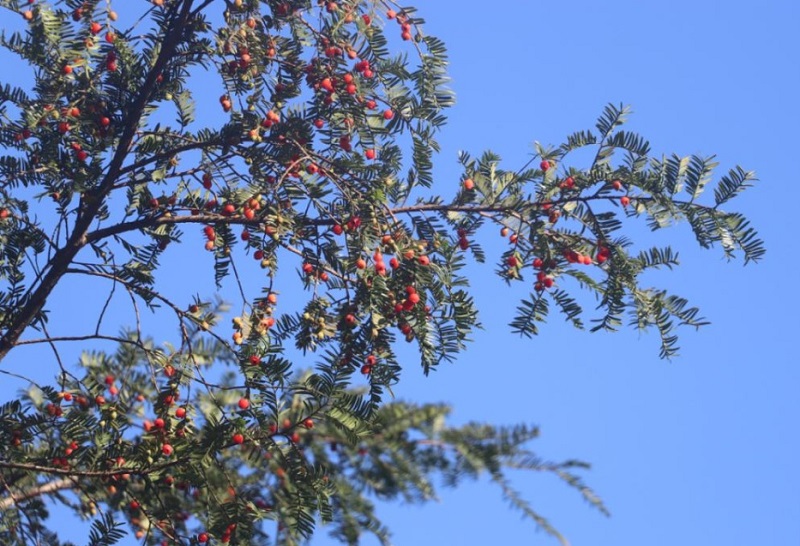
Photo courtesy of Qinling National Botanical Garden
The Chinese yew is an ancient seed plant that has survived major ice ages, emerging as a living relic from millions of years ago. Classified as a Class I nationally protected wild plant in China, it enjoys the reputation of the “Giant Panda of Plants”. It is a tall, upright evergreen arbor with linear leaves. When its seeds ripen, the bright red seed arils stand out strikingly against its emerald green foliage.
The Chinese yew imposes strict requirements on its growing conditions, preferring cool, humid, well-ventilated and pristine habitats deep in the mountains. Boasting immense ecological and scientific research value, it serves as a key indicator of sound ecological conditions and well-preserved native vegetation in the Qinling mountain forests. In recent years, conservation efforts for Chinese yews in the Qinling Mountains have yielded steady progress. Its populations show a recovery trend, with continuous emergence of new seedlings and a steady rise in population numbers.
Kingdonia: The Lonely Ancient Rare Herb
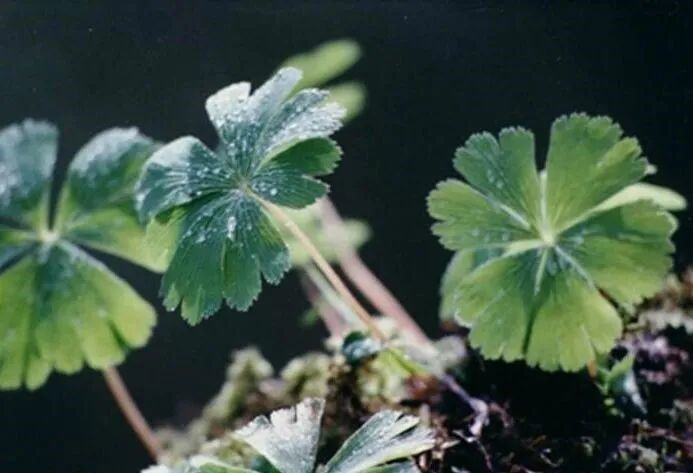
Photo courtesy of Shaanxi Heihe Forest Park
Kingdonia is a rare herb of immense scientific research value. The whole plant bears only one nearly round leaf, usually divided into five lobes, with a single pale green flower. Simple yet highly distinctive, it boasts an ancient origin and retains evolutionary traits of primitive angiosperms, making it key research material for botanists studying species evolution.
Kingdonia favors cool, damp surroundings and requires soil rich in humus. Vulnerable to direct sunlight and environmental disturbances, it mostly grows in forest undergrowth of mid-to-high mountain areas. In recent years, wild kingdonia populations have been discovered below 2,700 meters above sea level on the Qinling Mountains, marking a new breakthrough in the known distribution range of the species.
Paris Marmorata: Rare Medicinal Plant Hidden in Secluded Valleys
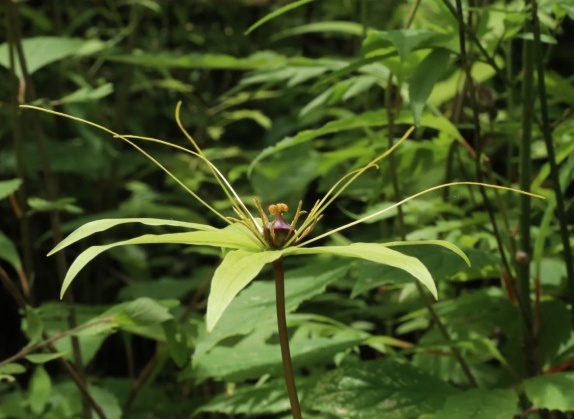
Photo courtesy of Qinling National Botanical Garden
Paris Marmorata is a Class II nationally protected wild plant found in secluded Qinling valleys. It grows in cool, moist mountain forest undergrowth, bearing 7 to 10 oblong leaves. Its flowers feature golden thread-like filaments, granting it a highly distinctive appearance, and is valuable as a wild medicinal plant resource.
The plant grows extremely slowly in the wild. Wild populations once suffered a sharp decline due to historical illegal harvesting. Thanks to wild plant conservation policies and harvesting bans implemented across the Qinling Mountains, wild populations of Paris Marmorata are gradually recovering.
One mountain is home to a myriad of lives and provides an excellent example of ecological balance. May we always live with reverence for nature, and jointly safeguard the harmonious coexistence of all life on the Qinling Mountains.
By Xi’an Qinling Ecological Environment Protection Administration