Chinese TV 2012: The Victory of an “Imported” Voice
By TANG YUANKAI
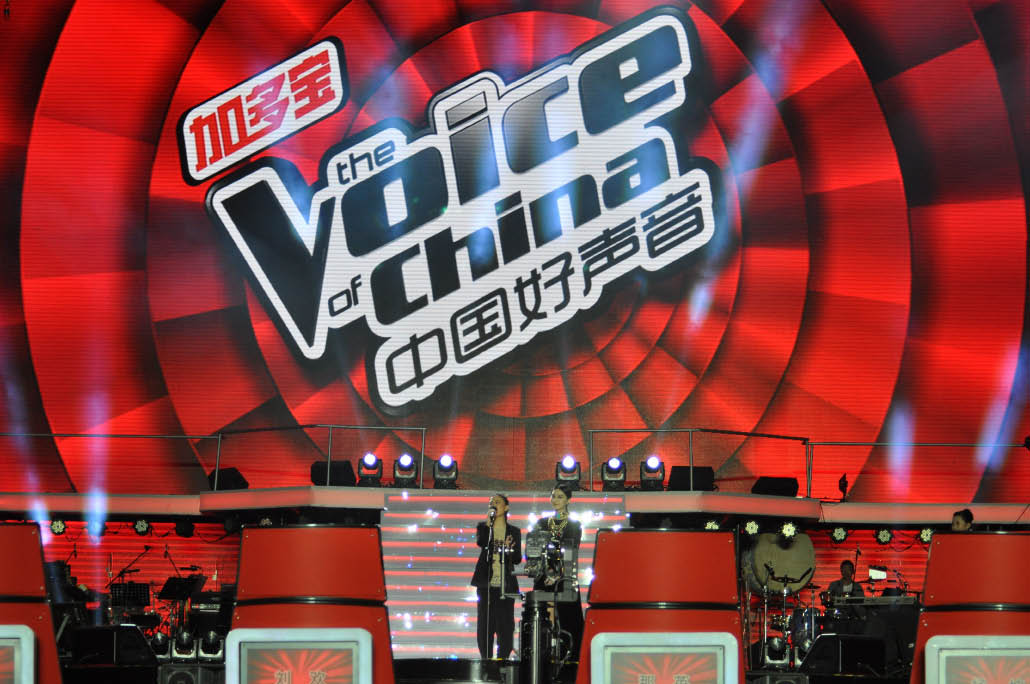 |
| The final round that represents the dreams of many ordinary people. Photos by CFP |
LIU Huan was well known as a singer before 2008. But it was his rendition of the Beijing 2008 Olympic Games’ official theme song that catapulted Liu into the stratosphere of domestic stardom.
When Liu announced earlier this year that he would not be reappearing as a judge on the new season of The Voice of China, it made headlines. The Voice of China had become the hottest TV program in China – losing Liu was a big blow.
First broadcasted in the Netherlands, The Voice was imported to China and its content localized. It ran on Zhejiang TV from July 13 and soon shot to the top of the ratings – 2.717 percent of TV viewers watched the second episode, while a record 5.036 percent viewership was recorded in September.
What’s more, television viewers made up only 20 percent of the show’s total audience. Four-fifths of viewers streamed the program on the Internet. In the first two days after the inaugural show, over 10 million people watched it online.
Importing Copyrights
The Karaoke-mad Chinese are particularly fond of music shows, but this is only one factor in the success of The Voice of China. One more important is the show’s pop star judges.
Forty-nine-year-old Liu Huan, who is incidentally a professor of Western music history, has the reputation of being the best male singer in China. The Voice of China marked his first appearance as a judge on any TV show. Liu’s participation generated tremendous excitement about the program.
The show’s format is also vital to its success. The live audience both listens to and watches a contestant, but the judges only listen – their chairs do not face the stage. If the judges like what they hear, they hit a button and their chairs swivel around. They are then committed to training the owner of the voice they’ve just heard – whether a beauty or not – for the next round of the competition. The dramatic swivel-around, change of expression on the judges’ faces, bitter comments, frank appraisals of looks and sharp quips all make the show a hit.
The Voice of China is also a stage for “small potatoes” to realize their dreams of stardom. In Chinese the phrase refers to ordinary Joes – truck drivers, country bumpkins, the “aesthetically challenged” and others who would have little chance of cracking the mainstream within the confines of the system. The only requirement to succeed on the show is a stellar voice – other factors are irrelevant. It gives all a fair go.
For Chinese audiences The Voice of China most likely reminds them of another spectacular show that ran roughly seven years ago. Super Girl, which gained an international following, featured SMS voting, a first for a Chinese TV show. On the evening of August 26, 2005, the top three contestants in the final round of Super Girl received a total of over nine million SMS votes. The show produced a number of previously unknown singers who went on to dominate the domestic pop charts.