|
 |
|
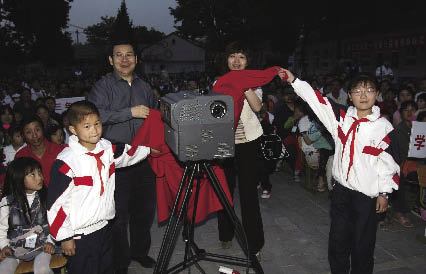
It’s serious but it’s fun too: Xu Yongguang launches a film festival for migrant children. |
It doesn’t end with donors either. “Charities and NGOs seem to think their problem is they don’t have enough money,” Brady explained. “What they don’t have, often, is answers to the questions donors pose.” The complexity of serious, well-managed philanthropy is why the Educational Roundtable willed itself into existence and why it continued to open up and transform. Conducting competency-building for senior executives on the donor side is critical to the maturation of philanthropy in China; capacity-building on the grantee side is also critical. Corporations need to figure out whether and how they have control over projects run by their beneficiaries, and how the tax benefits of corporate giving will work for them. But would-be beneficiaries need to figure out how to approach donors with sensitivity to the social mission of each organization. That’s where Sabina Brady’s opposite number He Jin at the Ford Foundation comes in; he is helping charities upgrade their skill set for making approaches, answering donor questions, and setting up monitoring and reporting.
The Educational Roundtable’s mission placed emphasis on education-specific funds but their search for good case studies was broad, and eventually pointed to America. Mercy Corps (US) has done a lot of the heavy lifting with respect to governance guidelines. This organization developed the Standards for Charity Accountability with professional and technical assistance from representatives of small and large charitable organizations, the accounting profession, grant making foundations, corporate contributions officers, regulatory agencies, research organizations and the Better Business Bureau. Case studies were a big part of the Educational Roundtable’s research agenda too. Some very informed speakers helped the group sort out best practices for the philanthropic arms of their member organizations. Guest organizations have been invited to sit in, and these have included Jet Li’s One Foundation.
Stepping up to support and drive this effort was the Civil Affairs Ministry. As sponsor of China Philanthropy Forum, in Beijing October 2009, they welcomed the China Charity Federation, China Children and Teenagers’ Foundation, China Red Cross, China Poverty Alleviation Foundation, China Youth Development Foundation, China Welfare Fund for the Disabled, Li Ka Shing Foundation,Bill& Melinda Gates Foundation, and the Clinton Foundation. On the theme of “Wise and Transparent Charity” delegates from government, businesses and charities focused on how to achieve transparency and high efficiency in philanthropic work. Soon after, a conference on philanthropy took place at Harvard University – mounted especially for China’s new philanthropists, by now expanded well beyond the Roundtable core. Instrumental in that were Chen Yimei, head of Mercy Corps’ China office, and her good friend Mr. Xu of Narada. Guardians of the American philanthropic tradition, through the Philanthropy Foundation and other “grandfather” groups in the forefront of giving in the U.S.A., shared their lessons learned with these serious, well-organized Chinese benefactors. They returned to begin work on a charter for the China Foundation Center, modeled to some extent on the US Foundation Center, to carry the standard and provide support to this emerging sector.
China’s Next Economic Miracle
 |
|
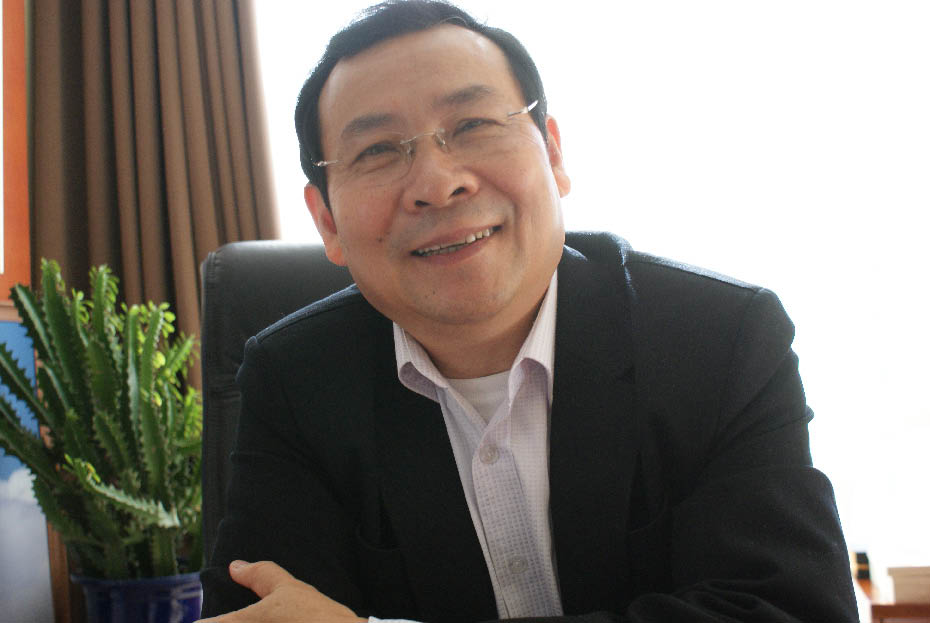
Not all China’s miracles are economic, according to Xu Yongguang, Narada’s philanthropist extraordinarie, who leads the charge to define best practices for charities in China. |
The corporate best-practice quest soon billowed out into the general question: What are the best practices for philanthropy in China? The compliance environment for foundations and funds is just emerging in China but the assumptions of the expanded group were that they could not just recommend transplanting North American philanthropic practices and regulations here.
“Charities have an immutable charter and articles of association that are welcomed by the Chinese government; unlike your average civil sector NGO, they cannot announce their mission as ‘we want to plant trees’ and the next day decide that human rights is what they really care about,” Brady explains. Foundations have to be clear on their mission and can’t change it, which is why they were the first through the gate in China. Organizations that work too directly with the grassroots can create governance problems the Chinese leadership could do without however. “On the other hand,” Xu Yongguang comments, “organizations like Bill Gates’ foundation and the Asia Foundation don’t develop much understanding of the people they’re trying to help, because they distribute their funds directly to governments. Mercy Corps and the Ford Foundation are the best examples of how to work in the balance between grassroots and government.”
With an eye to formulating practices for a China-suitable philanthropy, the mission now has to be in interpretation and modification. Some of the new philanthropists formed a delegation that returned to America on February 25, 2010 to decide what to bring back, and brainstorm about what problems might arise with the adoption of particular approaches in China. Fleshing out plans for the China Foundation is another milestone in the maturation of philanthropy in China. This over-arching support organization will have a mission to grease the wheels in the eternal partnership of grantors and grantees, providing what’s needed in order to loosen the purse strings quickly and confidently. “Expect more miracles,” Xu Yongguang smiles, “miracles always happen in China.” |